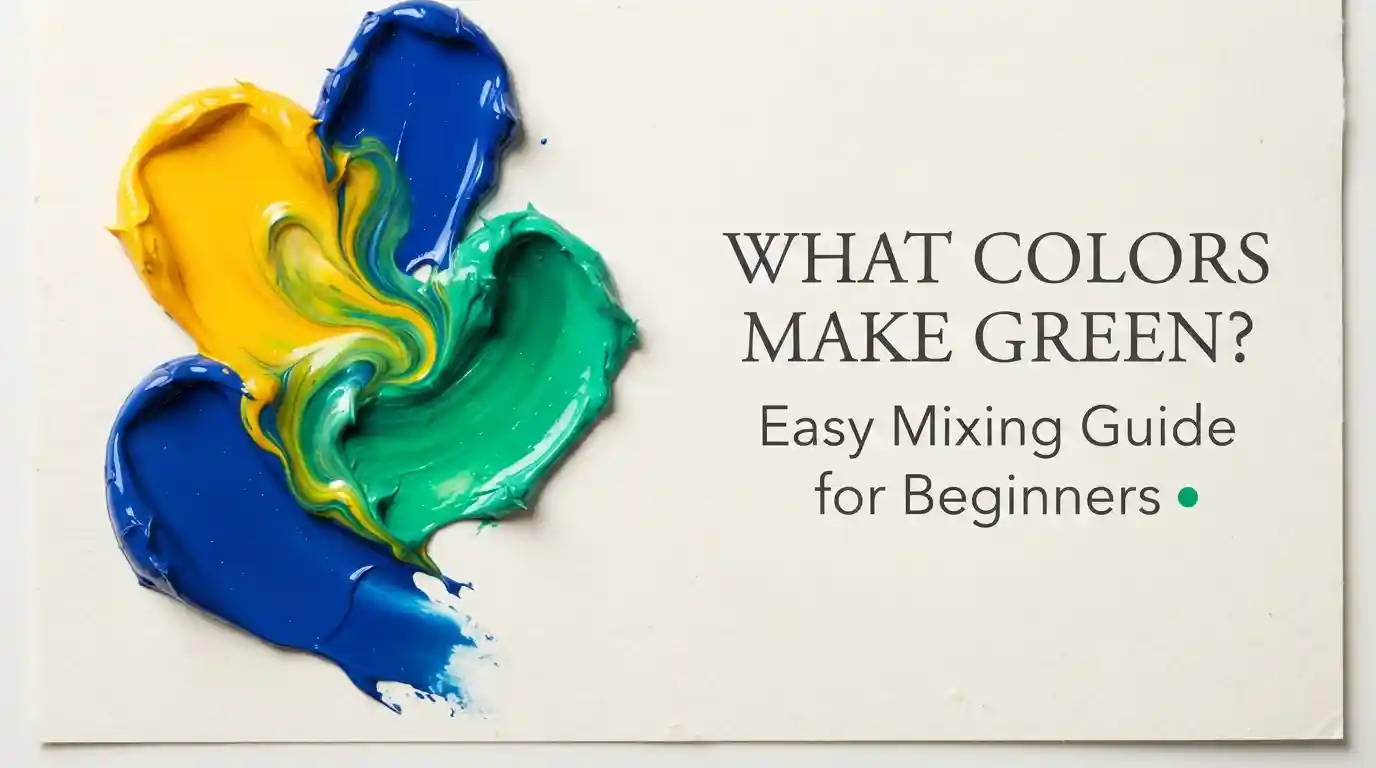
What Colors Make Green? Easy Mixing Guide for Beginners
Have you ever stood at your palette wondering exactly what colors make green before committing paint to canvas? It’s one of the most common questions beginner painters ask, and the good news is that green is one of the easiest colors to mix correctly once you understand the basics.
Main takeaway: Green is made by mixing blue and yellow paint, typically starting with a 1:1 ratio and adjusting from there. Lean more yellow for a warmer, spring-like green, or more blue for a deeper, cooler forest green. This simple two-color formula is the foundation for nearly every shade of green you’ll ever need.
This guide walks through exactly what colors make green, how to mix it step by step in paint, how ratios shift the final shade, and how to create green digitally using hex codes and RGB values.
What Is Green?
Green is a secondary color, sitting directly between blue and yellow on the traditional color wheel. It’s classified as neither fully warm nor fully cool, since its temperature shifts depending on how much blue or yellow leans into the mix — yellow-heavy greens read as warm, while blue-heavy greens read as cool.
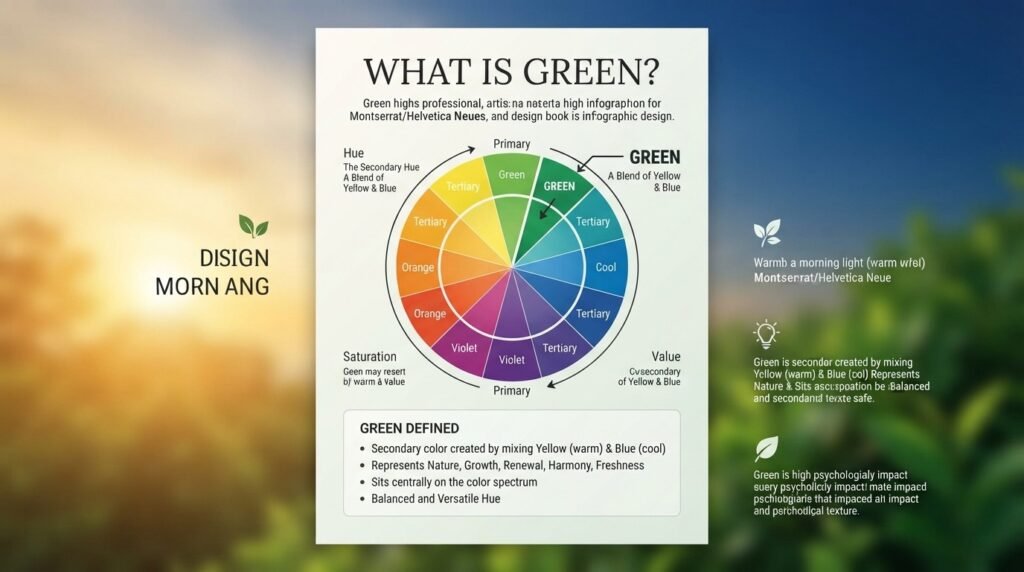
The standard digital representation of green is:
- Hex Code: #008000
- RGB Values: 0, 128, 0
Green sits at the midpoint of the visible light spectrum, which is part of why the human eye perceives it so easily and why it’s used so often for “go” signals, safety indicators, and calming interior spaces. Green is commonly associated with:
- Nature and growth
- Freshness and renewal
- Balance and calm
- Wealth and prosperity
- Health and sustainability
“Mixing green is a bit like blending morning and evening light — yellow brings the warmth of the sun, and blue brings the cool of the sky, and together they settle into the color of growing things.”
What Colors Make Green?
The direct answer to what colors make green is simple: blue and yellow. These are two of the three primary colors, and green is the secondary color that results when they combine. A basic starting ratio is 1 part blue to 1 part yellow, which produces a balanced, true green.
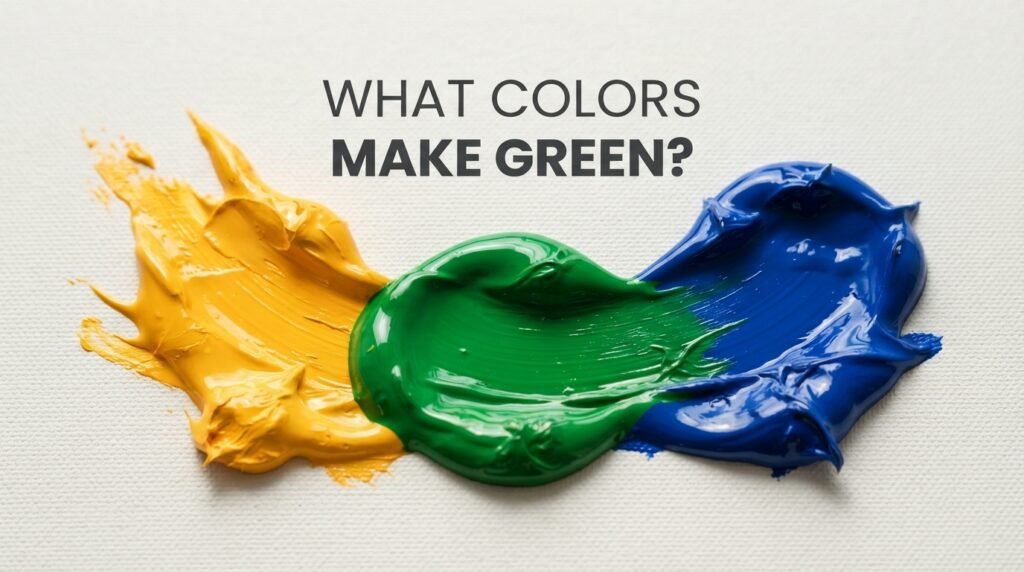
From that base, small shifts in ratio open up a wide range of green shades. More yellow pulls the mix toward a bright, grassy green, while more blue pushes it toward a deep, cool teal-green. This is exactly why what colors make green doesn’t have just one single answer — it depends on which direction you want the final shade to lean.
Step-by-Step: How to Mix Green in Paint
Learning how to make green in paint is straightforward once you know the starting ratio and how to adjust it.
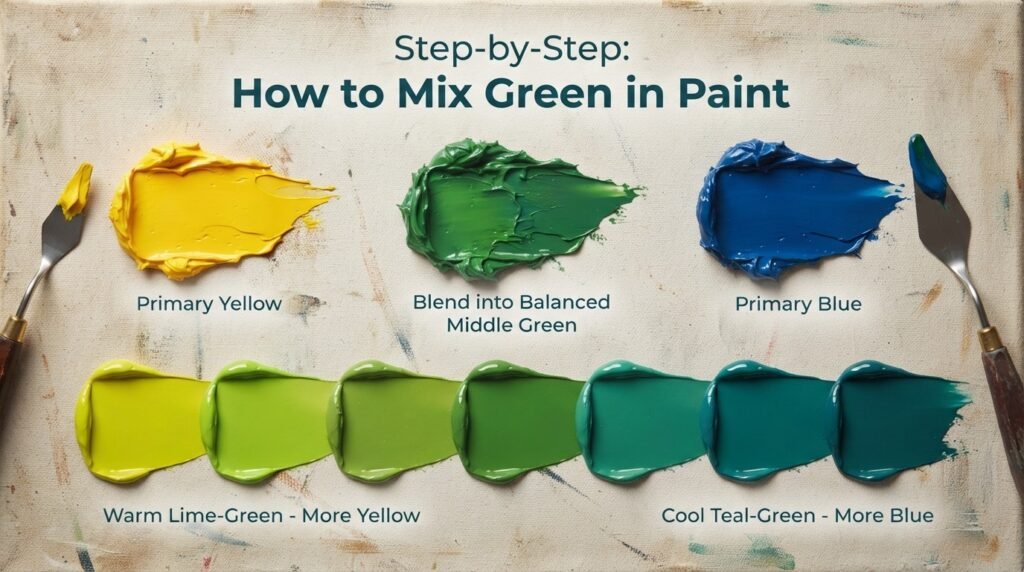
Step 1: Start With Your Base Colors
Use a clean blue and a clean yellow, such as:
- Ultramarine Blue or Phthalo Blue
- Cadmium Yellow or Lemon Yellow
Step 2: Mix in a 1:1 Ratio
Combine equal parts blue and yellow paint on your palette. Mix thoroughly until the color looks even, with no streaks of the original blue or yellow remaining.
Beginner Tip: Add blue into yellow rather than the other way around. Blue pigment is usually more concentrated, so a small amount can shift the whole mix further than expected.
Step 3: Adjust the Tone
To create different green variations:
For a warmer green:
- Add a small amount of extra yellow
- Add a tiny touch of orange for an olive lean
Step 4: Test Before Applying
Paint a small swatch and let it dry fully. Wet paint often looks darker and more saturated than the final dried result, so testing first prevents surprises on your actual canvas.
Mixing Chart: Green Variations and Color Combinations
The exact pigments you choose have a big effect on the final shade, even when the ratio stays the same. The chart below shows common pigment pairings artists use to create different greens.
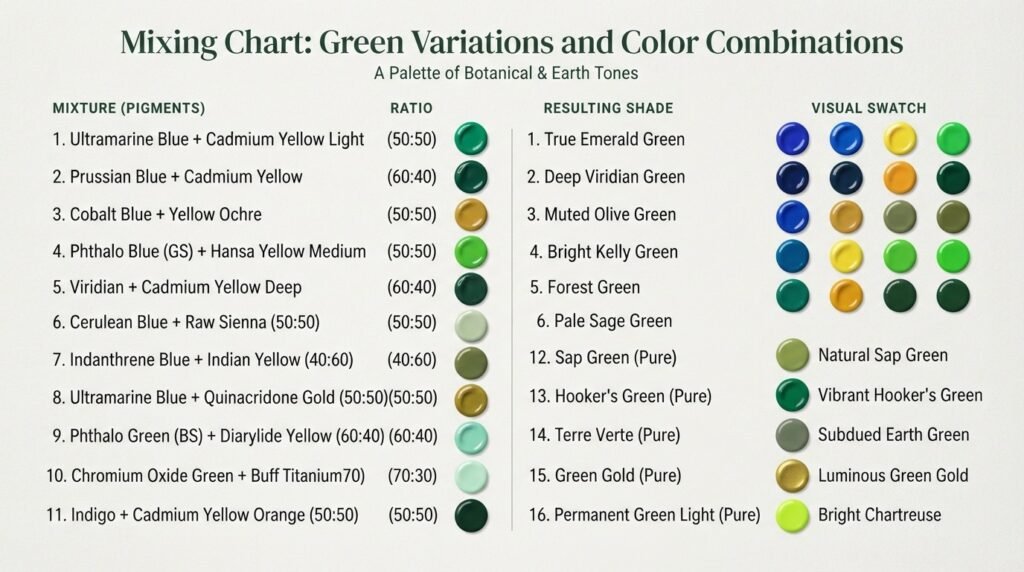
| Starting Colors | Mixing Ratio | Resulting Shade | Hex Code |
| Ultramarine Blue + Cadmium Yellow | 1:1 | True Green | #008000 |
| Phthalo Blue + Lemon Yellow | 1:1 | Bright Grass Green | #4CBB17 |
| Phthalo Blue + Cadmium Yellow | 1:2 | Warm Spring Green | #66B032 |
| Ultramarine Blue + Yellow Ochre | 1:1 | Olive Green | #708238 |
| Prussian Blue + Cadmium Yellow | 2:1 | Deep Forest Green | #228B22 |
| Cerulean Blue + Lemon Yellow | 1:1 | Cool Mint Green | #98FF98 |
| Phthalo Blue + Cadmium Yellow + White | 1:1:2 | Pastel Sage Green | #B2C8A9 |
| Ultramarine Blue + Cadmium Yellow + Black | 1:1:1 | Dark Pine Green | #01411C |
| Viridian + Cadmium Yellow | 1:1 | Emerald Green | #50C878 |
| Prussian Blue + Yellow Ochre | 1:1 | Muted Sea Green | #4A6741 |
A few of these combinations stand out for practical use. Prussian Blue with Cadmium Yellow at a 2:1 ratio produces one of the richest, most saturated forest greens on this list, ideal for landscape painting. Viridian mixed with Cadmium Yellow lands close to a true emerald, which is a popular choice for jewelry-inspired illustration work. Notice how adding white or black doesn’t change the underlying hue much — it mainly shifts the lightness or darkness of the same base green.
How to Make Green With Different Starting Colors
If you don’t have a standard blue and yellow on hand, there are a few alternative paths that still get you to green.
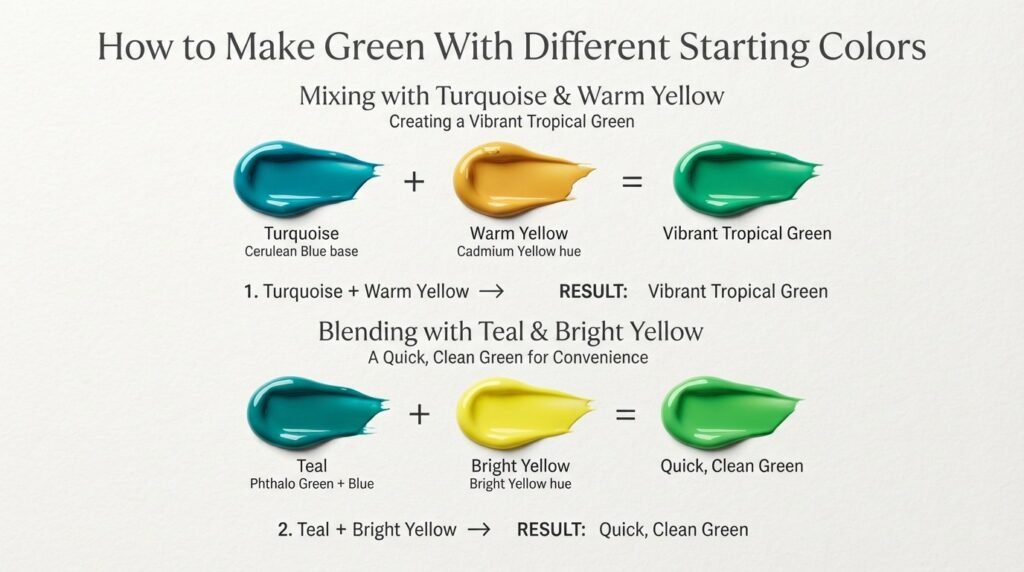
Using Turquoise Instead of Blue
Turquoise already leans slightly toward green, so mixing it with yellow produces a brighter, more tropical green faster than starting from a pure blue.
Mixing From a Pre-Made Teal
Some painters start with a ready-made teal or cyan and add yellow gradually, which shortens the mixing process and produces a clean, vivid green with fewer steps.
Using Complementary Color Correction
If your green comes out too dull, adding a very small amount of yellow (its near-complementary warm partner) can boost saturation without changing the overall hue.
This flexibility is one reason what colors make green has more than one correct answer — the underlying principle (a cool color plus a warm yellow) stays the same even when the specific starting pigments change.
How to Make Green Digitally (RGB/Hex)
Digital color mixing works differently from paint, since screens combine light rather than pigment.
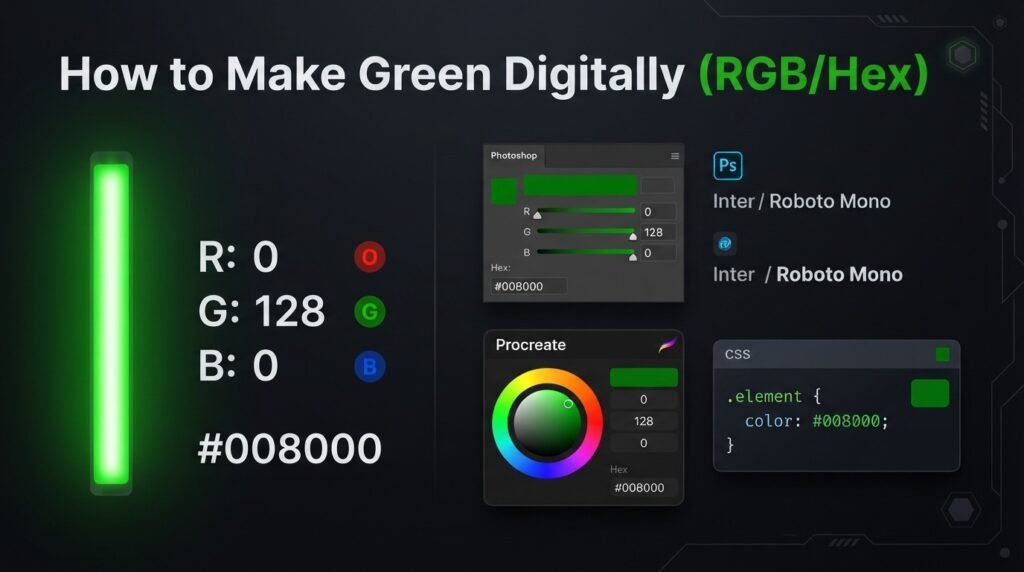
The standard digital green values are:
- Hex Code: #008000
- RGB Values: RGB (0, 128, 0)
This means the red channel is set to 0, the green channel is set to 128, and the blue channel is set to 0. Unlike paint, digital green comes from isolating the green light channel rather than blending two separate colors together.
Using Green in Design Software
Photoshop
- Open the color picker
- Enter hex value: 008000
- Press OK
Procreate
- Tap the color circle
- Enter RGB values: R: 0, G: 128, B: 0
CSS/Web Design
color: #008000;
background-color: green;
Common Mistakes When Making Green
1. Using Too Much Blue
Problem: The green turns teal or blue-dominant instead of true green. Fix: Add more yellow gradually until the blue tint balances out.
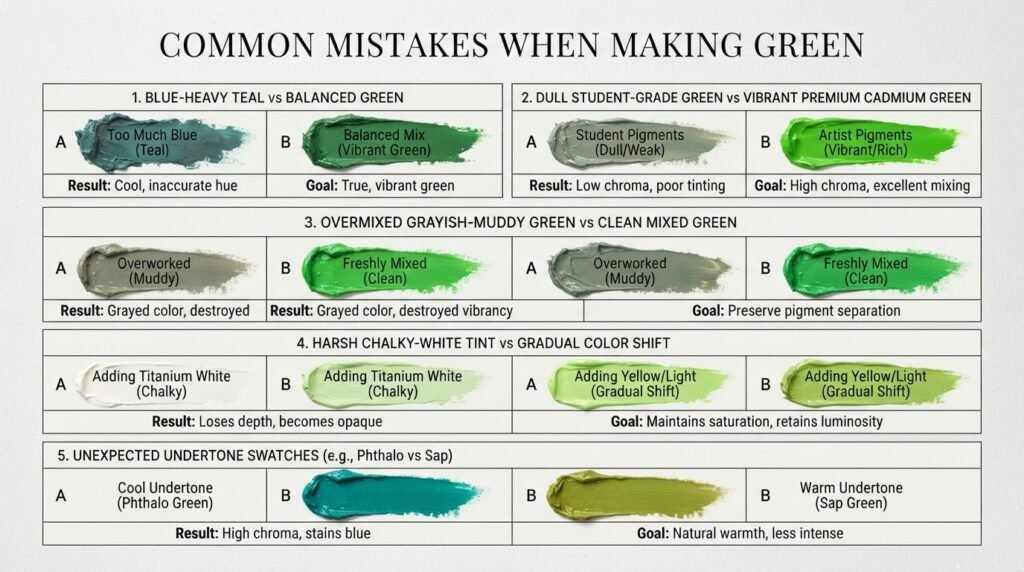
2. Using Low-Quality Yellow Paint
Problem: The green looks dull, chalky, or transparent instead of vivid. Fix: Switch to a high-pigment yellow like Cadmium Yellow rather than a student-grade paint.
3. Overmixing the Colors
Problem: The green loses vibrancy and turns muddy or grayish. Fix: Mix only until the color is even, and avoid stirring longer than necessary.
4. Adding Too Much White or Black
Problem: The green shifts far away from the original hue instead of just changing lightness. Fix: Add lightening or darkening agents in very small increments, testing after each addition.
5. Ignoring Undertones
Problem: The green looks unexpectedly warm or cool once dried. Fix: Check whether your blue leans toward violet or teal, and your yellow leans toward orange or lemon, before mixing.
Tips for Getting a Consistent, Vivid Green Color
For professional-looking results every time:
Use Quality Pigments: Premium blue and yellow paints create cleaner, more saturated greens with better coverage.
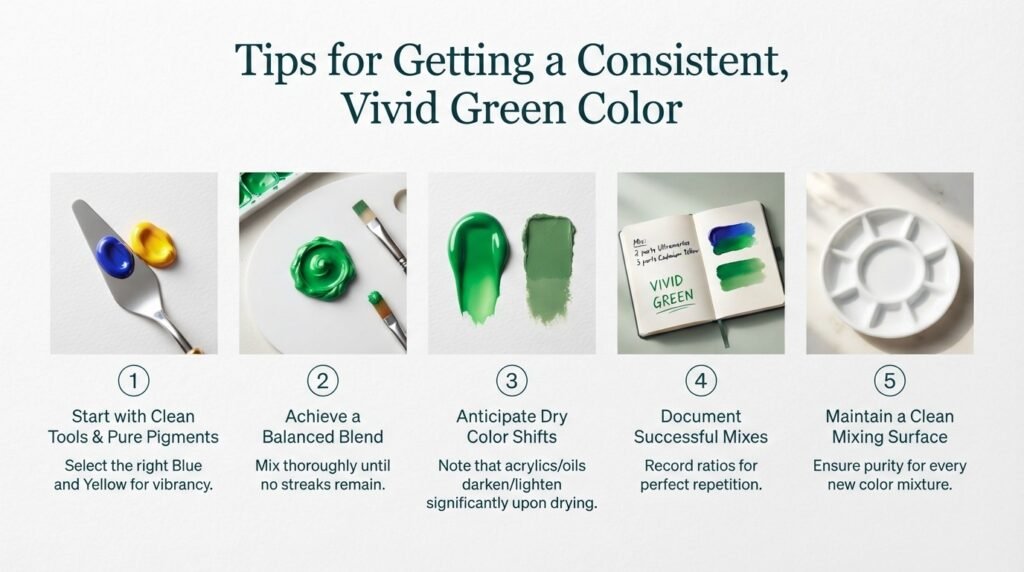
Mix Small Batches: Create only what you need for a single session to avoid running out mid-project and struggling to match the exact shade again.
Test Dry Samples: Always check a dried swatch, since paint color often shifts noticeably as it dries.
Keep Notes:s Record your exact ratios and pigment brands so you can recreate the same green in future projects.
Use a Clean Palette:e Leftover paint from other colors can throw off an otherwise clean green mix.
Real-Life Uses of Green
Green is one of the most widely used colors across creative industries.
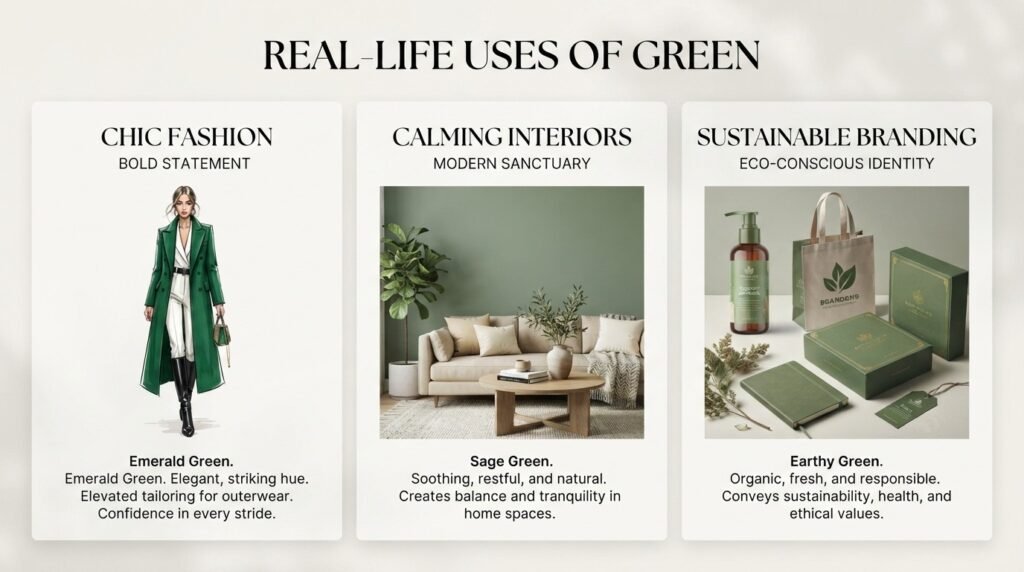
Fashion: Green clothing creates:
- Earthy, grounded looks
- Bold statement pieces in emerald or kelly green
- Fresh, seasonal spring collections
Interior Design:n Green walls and furniture create:
- A calming, nature-inspired atmosphere
- A strong accent against neutral tones
- A popular choice for kitchens and home offices
Branding: ng Many brands use green to communicate:
- Sustainability and eco-friendliness
- Growth and financial stability
- Health and wellness
Shades and Variations of Green
Green covers an unusually wide range of distinct, recognizable shades.
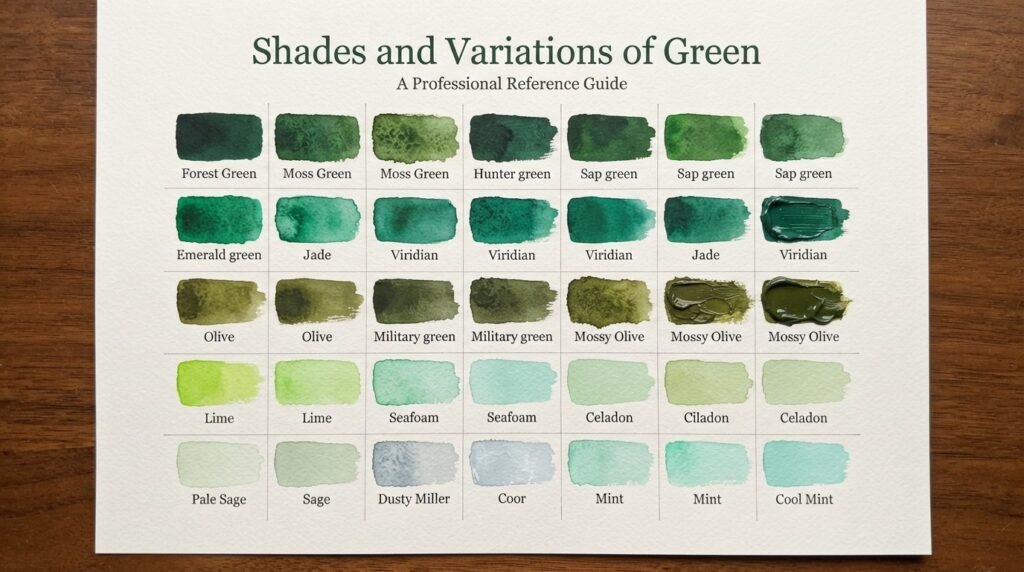
| Shade Name | Hex Code | Common Uses |
| Forest Green | #228B22 | Outdoor branding, landscape painting |
| Emerald Green | #50C878 | Jewelry, luxury branding |
| Sage Green | #9CAF88 | Interior design, calming spaces |
| Mint Green | #98FF98 | Packaging, fresh/spring themes |
Where Green Sits on the Color Wheel
Green is a secondary color, formed by mixing the two primary colors blue and yellow.
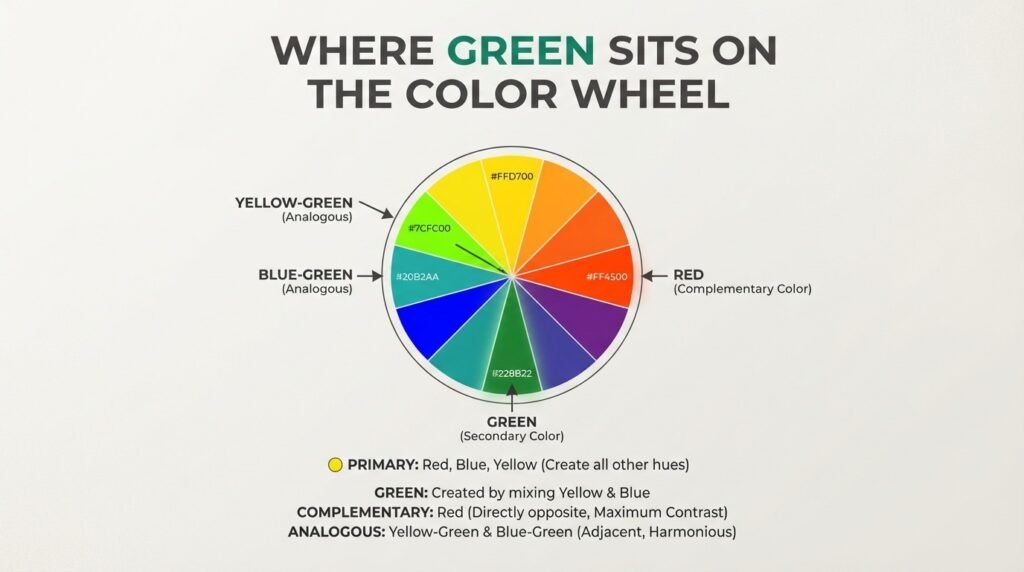
Complementary Color
Green’s complementary color is red, which sits directly opposite it on the color wheel. Pairing green with red creates high contrast, which is why the combination shows up so often in bold branding and holiday design.
Analogous Colors
Green sits next to blue-green and yellow-green on the color wheel, making these its natural analogous partners for a harmonious palette.
Tertiary Status
Green itself is not a tertiary color, but its close cousins yellow-green and blue-green are, since they form by mixing green with one of its neighboring primaries.
Conclusion
Understanding what colors make green comes down to one simple formula: blue and yellow, mixed in roughly equal parts as a starting point. From there, small ratio shifts open up everything from bright spring green to deep forest green. Test your mixes on scrap paper before committing to a final piece, since wet paint rarely matches its dried result. With a little practice, mixing green becomes one of the fastest, most reliable skills in any painter’s toolkit.
Frequently Asked Questions
What colors make green?
Blue and yellow make green when mixed. A roughly 1:1 ratio produces a balanced, true green as a starting point.
How do you make green color at home?
You can make green at home by mixing blue and yellow paint in equal parts, then adjusting the ratio for a warmer or cooler shade. Testing on scrap paper first helps confirm the result before applying it to a project.
Can red and yellow make green?
No, red and yellow make orange, not green. To make green, you need blue and yellow specifically.
What two colors make dark green?
Blue and yellow make dark green when a small amount of black is added, or when a deeper blue like Prussian Blue is used instead of a lighter blue. This darkens the mix without shifting it away from the green hue.
How do you make light green?
Light green is made by mixing blue and yellow first, then adding white gradually until the desired lightness is reached. Adding white in small increments prevents the color from becoming too pale too quickly.
What is the hex code for green?
The standard hex code for green is #008000, with RGB values of 0, 128, 0. Different shades like emerald or mint green each have their own distinct hex codes.
Why does my green look muddy instead of vibrant?
A muddy green usually comes from overmixing, low-quality pigments, or adding too much of a third color. Using high-pigment paints and mixing only until the color is even usually solves the problem.