
What Colors Make White: The Best Mixing Methods
Have you ever wondered What Colors Make White when painting, designing, or experimenting with colors? White is one of the most important colors in art, interiors, fashion, and digital design, but creating it can be surprisingly confusing because the answer depends on whether you are mixing paint pigments or light colors.
Main takeaway: Pure white cannot usually be created by mixing traditional paint colors. In pigment-based painting, the closest results come from using a clean white base pigment (such as titanium white) and adjusting it with tiny amounts of other colors. In digital color mixing, white is created by combining full red, green, and blue light (RGB 255, 255, 255).
This guide explains how to make white, what colors create white-like shades, how to mix different white variations, and how artists and designers achieve the perfect white tone.
What Is White?
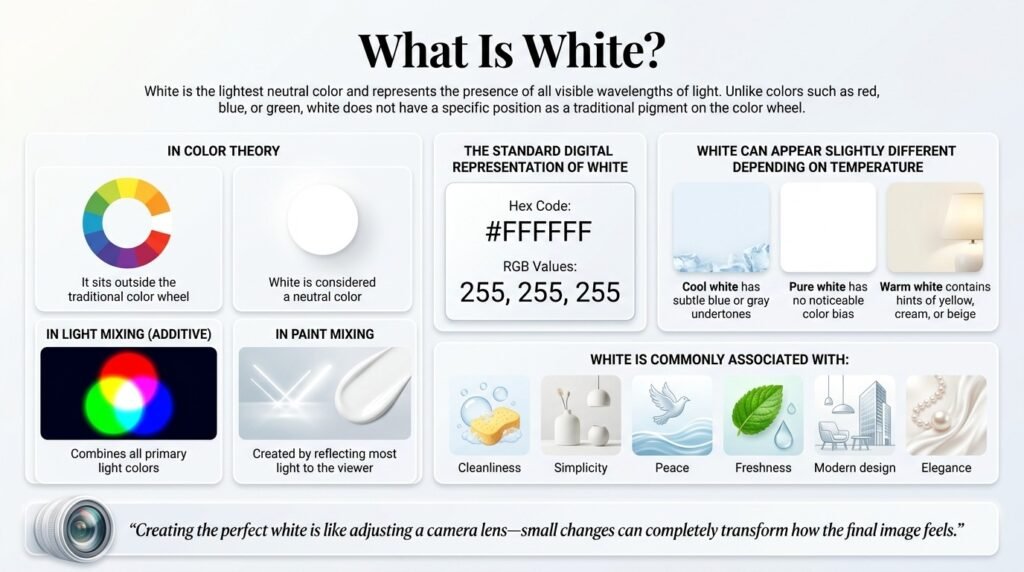
White is the lightest neutral color and represents the presence of all visible wavelengths of light. Unlike colors such as red, blue, or green, white does not have a specific position as a traditional pigment on the color wheel.
In color theory:
- White is considered a neutral color
- It sits outside the traditional color wheel
- In light mixing, white is created by combining all primary light colors
- In paint mixing, white is created by reflecting most light to the viewer
The standard digital representation of white is:
- Hex Code: #FFFFFF
- RGB Values: 255, 255, 255
White can appear slightly different depending on temperature:
- Cool white has subtle blue or gray undertones
- Warm white contains hints of yellow, cream, or beige
- Pure white has no noticeable color bias
White is commonly associated with:
- Cleanliness
- Simplicity
- Peace
- Freshness
- Modern design
- Elegance
“Creating the perfect white is like adjusting a camera lens—small changes can completely transform how the final image feels.”
What Colors Make White?
The answer to What Colors Make White depends on the medium you are using.
In Paint Mixing
Traditional paint colors do not create true white because pigments work by absorbing light rather than adding it. Mixing many colors usually produces a muddy gray or brown tone.
The closest method for making white at home with paint is:
Base formula:
| Color | Ratio |
| Titanium White Paint | 95% |
| Tiny amount of Blue or Violet | 5% |
Adding a very small amount of cool pigment can neutralize yellow undertones and create a cleaner white.
In Digital Color Mixing
For screens and digital designs:
| Color | Amount |
| Red Light | 255 |
| Green Light | 255 |
| Blue Light | 255 |
RGB mixing creates pure white because all light colors combine.
Step-by-Step: How to Mix White in Paint
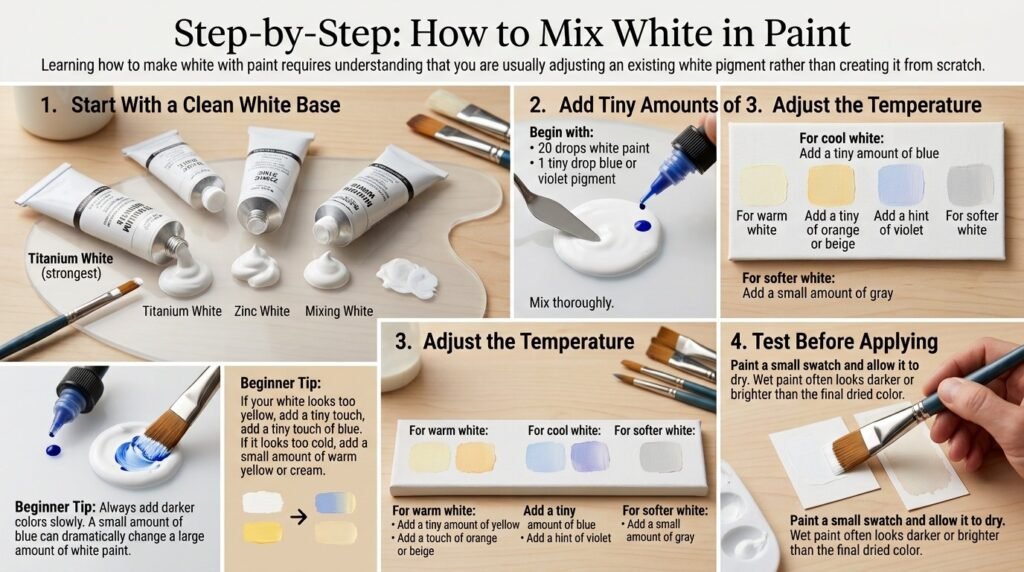
Learning how to make white with paint requires understanding that you are usually adjusting an existing white pigment rather than creating it from scratch.
Step 1: Start With a Clean White Base
Use a high-quality white pigment such as:
- Titanium white
- Zinc white
- Mixing white
Titanium white is the strongest and most commonly used option because it provides excellent coverage.
Step 2: Add Tiny Amounts of Color
Begin with:
- 20 drops white paint
- 1 tiny drop blue or violet pigment
Mix thoroughly.
Beginner Tip:
Always add darker colors slowly. A small amount of blue can dramatically change a large amount of white paint.
Beginner Tip: If your white looks too yellow, add a tiny touch of blue. If it looks too cold, add a small amount of warm yellow or cream.
Step 3: Adjust the Temperature
To create different white tones:
For warm white:
- Add a tiny amount of yellow
- Add a touch of orange or beige
For cool white:
- Add a tiny amount of blue
- Add a hint of violet
Step 4: Test Before Applying
Paint a small swatch and allow it to dry.
Wet paint often looks darker or brighter than the final dried color.
Mixing Chart: White Variations and Color Combinations
The following chart shows common ways artists create different white shades.
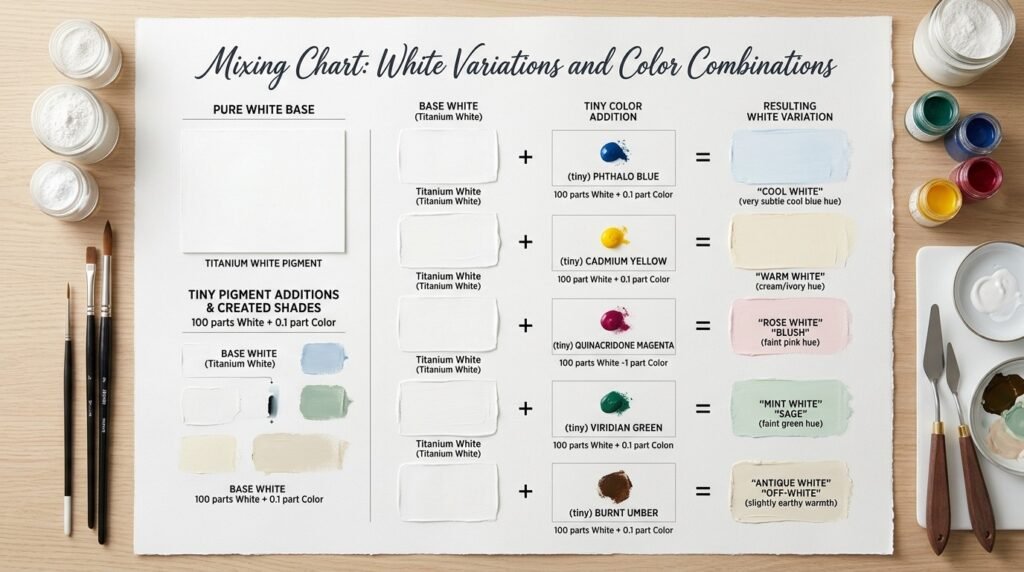
| Starting Colors | Mixing Ratio | Resulting Shade | Hex Code |
| Titanium White + Nothing | 100:0 | Pure White | #FFFFFF |
| White + Tiny Blue | 95:5 | Cool White | #F8FAFF |
| White + Tiny Yellow | 95:5 | Warm White | #FFFDF0 |
| White + Gray | 90:10 | Soft Gray White | #F2F2F2 |
| White + Beige | 90:10 | Cream White | #FFFDD0 |
| White + Violet Hint | 98:2 | Pearl White | #F8F6FF |
| White + Pink Hint | 97:3 | Blush White | #FFF5FA |
| White + Green Hint | 98:2 | Mint White | #F5FFF8 |
| White + Black Hint | 95:5 | Smoky White | #EDEDED |
| White + Brown Hint | 95:5 | Antique White | #FAEBD7 |
If you do not have pure white paint available, there are a few alternative approaches that can create white-like results.
Mixing Complementary Colors
Some artists mix opposite colors to create neutral tones:
- Blue + orange
- Red + green
- Yellow + purple
These combinations create gray or neutral shades, which can then be lightened with white.
However, they will not produce a true bright white.
Creating an Off-White Shade
You can make attractive white alternatives using:
Ivory White
Formula:
- White base
- Small amount of yellow
- Tiny touch of brown
Result:
A warm, classic white used in vintage designs.
Pearl White
Formula:
- White
- Tiny amount of violet
- Small amount of blue
Result:
A soft, elegant white with a cool glow.
Cream White
Formula:
- White
- Yellow
- Small amount of beige
Result:
A cozy white often used in interiors.
How to Make White Digitally (RGB/Hex)
Digital colors work differently from paint.
The exact digital white color is:
White Hex Code
#FFFFFF
RGB Values
RGB (255, 255, 255)
This means:
- Red = 255
- Green = 255
- Blue = 255
The maximum value for each RGB channel creates pure white.
Using White in Design Software
Photoshop
- Open the color picker
- Enter hex value:
FFFFFF - Press OK
Procreate
- Tap the color circle
- Enter RGB values:
- R: 255
- G: 255
- B: 255
CSS/Web Design
Use:
color: #FFFFFF;
background-color: white;
Common Mistakes When Making White
1. Adding Too Much Blue
Problem:
The white becomes icy blue.
Fix:
Add more pure white to balance the tone.
2. Mixing Too Many Colors
Problem:
The result becomes gray or muddy.
Fix:
Use fewer pigments and start with a clean white base.
3. Using Low-Quality White Paint
Problem:
The color looks dull or transparent.
Fix:
Choose high-quality titanium white pigment.
4. Confusing Digital and Paint Mixing
Problem:
RGB white does not work the same way as paint.
Fix:
Remember:
- Light mixing = colors combine to make white
- Paint mixing = pigments remove light
5. Ignoring Undertones
Problem:
White looks yellow, blue, or gray unexpectedly.
Fix:
Test your color under the lighting where it will be used.
Tips for Getting a Consistent, Vivid White Color
For professional-looking results:
Use Quality Pigments
Premium paints create cleaner whites with better coverage.
Mix Small Batches
Create only what you need to avoid inconsistent results.
Test Dry Samples
Always check dried paint because colors shift during drying.
Keep Notes
Record your ratios so you can recreate the same white later.
Use a Clean Palette
Dirty brushes can introduce unwanted colors into white paint.
Real-Life Uses of White
White is one of the most versatile colors across industries.

Fashion
White clothing creates:
- Minimalist styles
- Elegant looks
- Fresh summer designs
Interior Design
White walls and furniture create:
- Larger-looking spaces
- Bright rooms
- Modern aesthetics
Branding
Many brands use white to communicate:
- Trust
- Simplicity
- Luxury
- Clean design
Shades and Variations of White
White has many subtle variations.
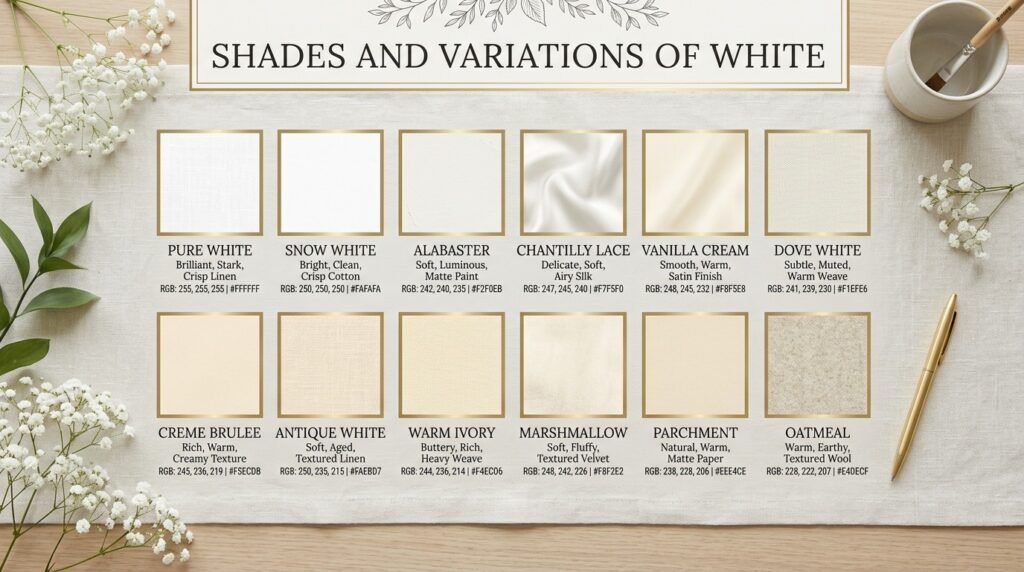
| Shade Name | Hex Code | Common Uses |
| Pure White | #FFFFFF | Digital designs, modern spaces |
| Snow White | #FFFAFA | Soft backgrounds |
| Ivory White | #FFFFF0 | Weddings, luxury interiors |
| Antique White | #FAEBD7 | Vintage designs |
Where White Sits on the Color Wheel
White does not appear on the traditional color wheel because it is a neutral color.
Complementary Colors
White works well with almost every color, including:
- Black
- Navy blue
- Emerald green
- Burgundy
Analogous Colors
Since white has no hue, it does not have traditional analogous colors. However, designers often pair it with:
- Light gray
- Beige
- Soft pastels
Tertiary Status
White is not considered a primary, secondary, or tertiary color.
It is classified as a neutral.
Conclusion
Understanding What Colors Make White depends on whether you are mixing paint or digital colors. For traditional painting, you usually cannot create true white by combining pigments. Instead, start with a high-quality white base and adjust it with tiny amounts of other colors.
The easiest formula for creating beautiful white variations is:
95% titanium white + 5% carefully chosen tint color
Experiment with different undertones, test your mixtures, and you will quickly learn how to make white shades that match your creative projects.
FAQs About Making White
What colors make white paint?
True white paint cannot usually be created by mixing other paint colors. The best method is using titanium white and adjusting it with tiny amounts of other pigments.
How do you make white color at home?
You can create white-like shades by starting with white paint and adding very small amounts of blue, yellow, gray, or violet to adjust the tone.
Can red, blue, and yellow make white?
No. Mixing red, blue, and yellow paint usually creates a dark or muddy color because pigments absorb light.
What two colors make white?
No two traditional paint colors create pure white. However, combining red, green, and blue light creates white digitally.
How do you make warm white?
Warm white is created by adding a tiny amount of yellow, cream, or beige pigment to a white base.
How do you make cool white?
Cool white is made by adding a very small amount of blue or violet pigment to white paint.
What is the hex code for white?
The standard hex code for white is #FFFFFF, with RGB values of 255, 255, 255.