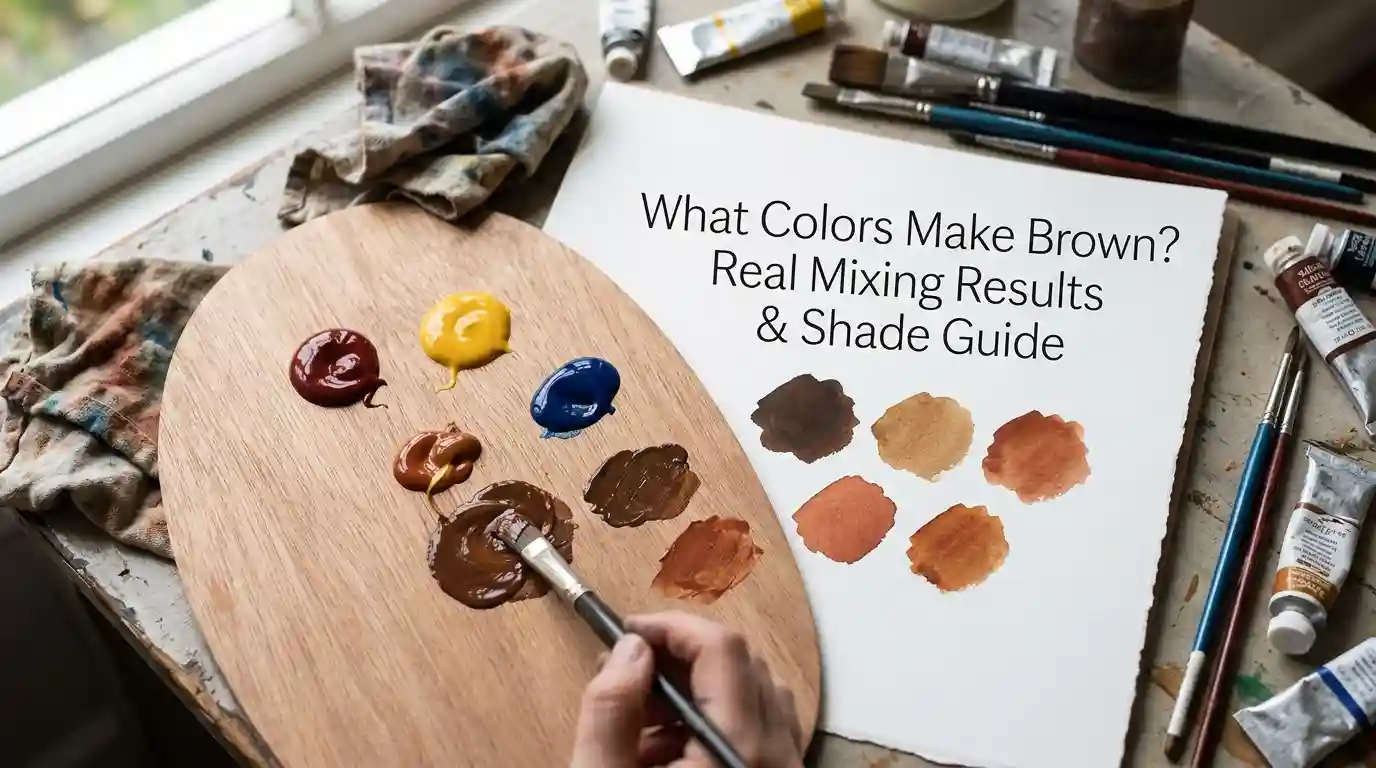
What Colors Make Brown? Real Mixing Results & Shade Guide
Ever stared at your palette wondering what colors make brown, only to end up with a muddy gray mess instead? You’re not alone — brown is one of the trickiest “neutral” colors to mix well, because it’s really a balancing act between warm and cool tones rather than one simple recipe.
Main takeaway: The fastest way to mix brown is combining red, yellow, and blue in roughly a 2:2:1 ratio (or, more simply, mixing a primary color with its complementary color — like blue and orange, or red and green). Adjust the ratio slightly, and you can shift brown from warm chocolate to cool taupe in seconds.
By the end of this guide, you’ll know exactly how to mix brown with paint, how to build it digitally with hex and RGB codes, and how to fix the most common reasons a brown mix turns out too gray, too pink, or too dull.
What Is Brown?
Brown isn’t actually a “pure” color in the same sense as red or blue. It’s a composite, low-saturation color — technically a darkened, desaturated version of orange. On a traditional color wheel, brown sits close to orange’s position but pulled down in brightness and pulled back in intensity.
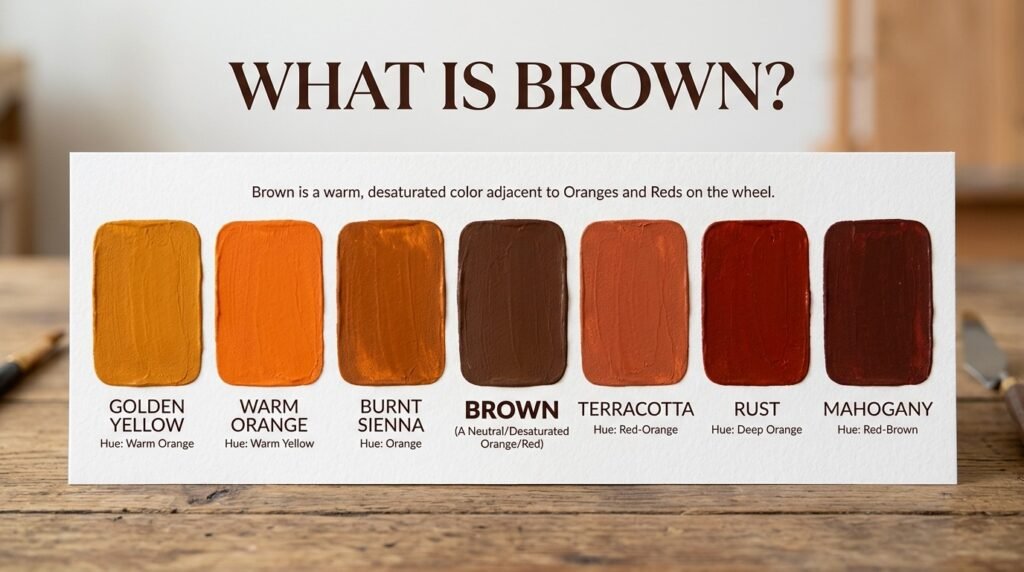
Brown reads as a warm, earthy tone, though it can lean cooler or warmer depending on which colors dominate the mix. Here’s a quick breakdown of brown’s core traits:
- Warm or cool: Usually warm, but can shift cool with more blue or gray added
- Color wheel position: A tertiary/neutral shade near orange
- Common associations: Earth, wood, stability, comfort, autumn
- Standard hex code: #A52A2A
- RGB values: 165, 42, 42
Because brown sits so close to orange on the wheel, most how to make brown questions actually come down to one thing: how do you dull down a bright orange without turning it gray? The answer, as you’ll see below, is controlled amounts of blue or black.
What Colors Make Brown?
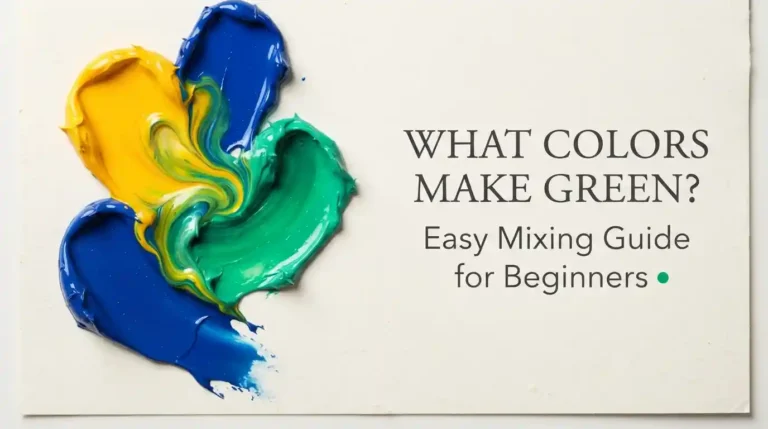
Here’s the direct answer to what colors make brown: mix all three primary colors. Specifically:
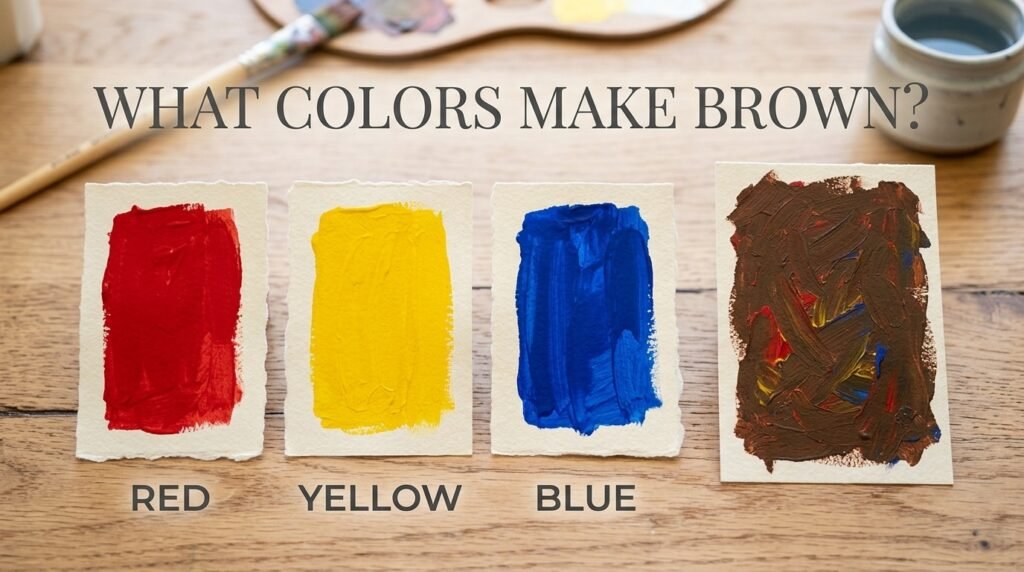
- 2 parts red
- 2 parts yellow
- 1 part blue
This combination works because red and yellow first create orange, and the small amount of blue then neutralizes and darkens that orange into brown. If you prefer working with secondary colors instead of primaries, you can also get brown by mixing orange and blue in roughly equal parts, since orange and blue are complementary colors that cancel each other into a neutral, earthy tone.
Beginner Tip: If your brown looks too orange, add a tiny bit more blue. If it looks muddy or gray, add a touch more red or yellow to bring back warmth. Change one color at a time — brown is easy to overcorrect.
Step-by-Step: How to Mix Brown in Paint
Learning how to make brown color with real paint is easier when you build it in stages instead of dumping colors together at once.
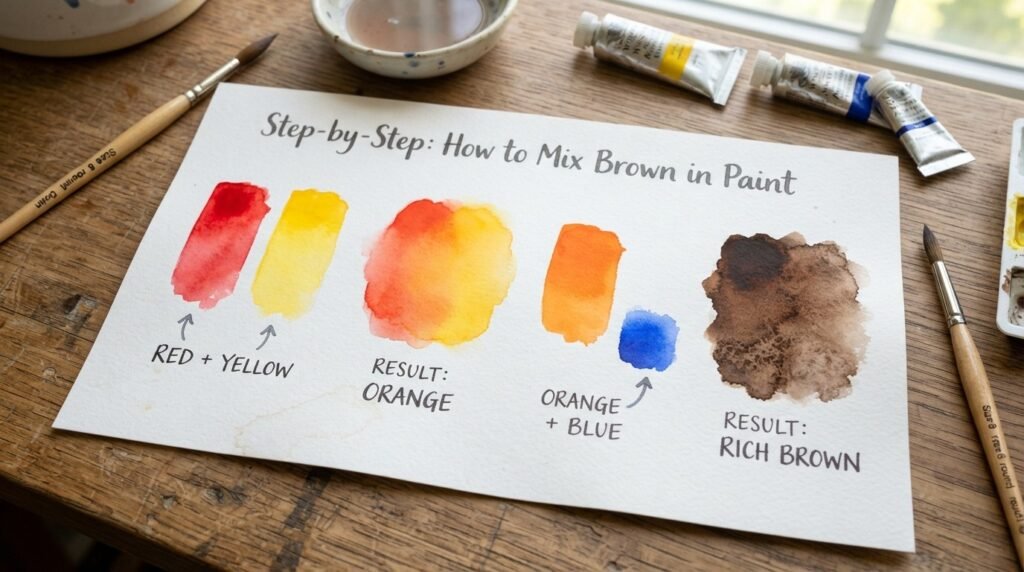
- Start with your base. Squeeze out 2 parts red and 2 parts yellow onto your palette.
- Mix to orange first. Blend the red and yellow fully before adding anything else — this gives you a clean starting point.
- Add blue gradually. Mix in 1 part blue, a little at a time, stirring after each addition.
- Check the tone. You’re looking for a warm, earthy brown, not gray. Stop adding blue as soon as the orange “breaks” into brown.
- Adjust lighter or darker. Add white in small amounts to lighten the brown, or a touch more blue (not black) to deepen it without dulling the color.
- Adjust warmer or cooler. For a warmer brown, mix in more red or a touch of orange. For a cooler brown, add a small amount of blue or gray.
This step-by-step approach to making brown at home also works with acrylics, watercolors, and oils — the ratio stays the same, though watercolors will look more transparent and may need less blue to shift the same way.
Brown Paint Mixing Chart
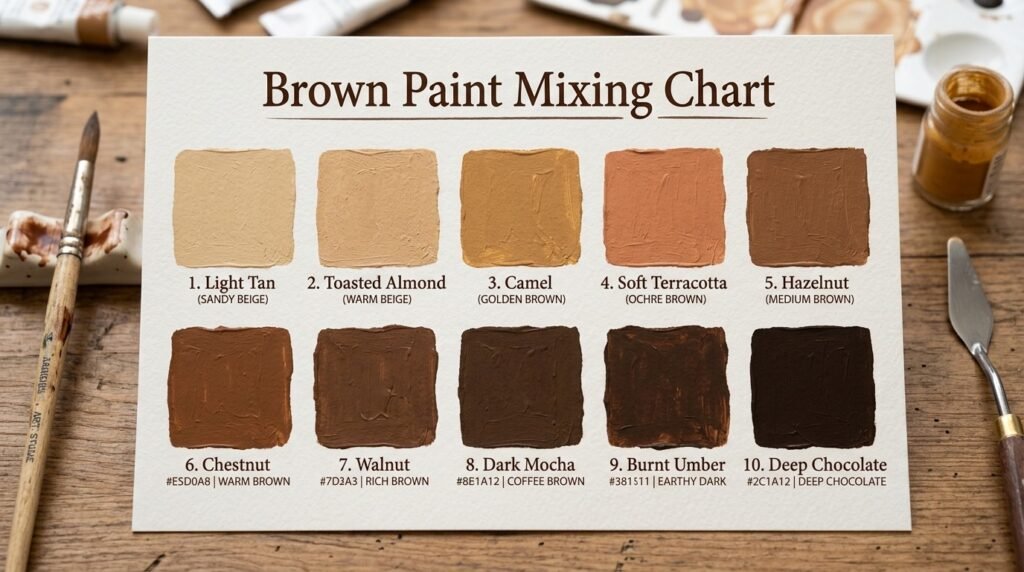
Not every brown needs the same ratio. The chart below shows how small changes in your red-yellow-blue mix create noticeably different brown shades, which is useful once you know what colors make brown in general and want to fine-tune the exact result.
| Red | Yellow | Blue | White | Resulting Shade | Hex Code |
| 2 parts | 2 parts | 1 part | — | Standard Brown | #A52A2A |
| 3 parts | 2 parts | 1 part | — | Reddish Brown | #8B3A2B |
| 2 parts | 3 parts | 1 part | — | Golden Brown | #966919 |
| 2 parts | 2 parts | 2 parts | — | Cool Taupe Brown | #6E5849 |
| 1 part | 1 part | 1 part | — | Dark Umber | #4B3621 |
| 2 parts | 2 parts | 1 part | 2 parts | Light Tan | #C8A27A |
| 2 parts | 2 parts | 1 part | 4 parts | Beige Brown | #D8BFA0 |
| 3 parts | 1 part | 1 part | — | Chestnut Brown | #7B3F1E |
| 1 part | 3 parts | 1 part | — | Amber Brown | #A9752F |
| 2 parts | 1 part | 2 parts | — | Chocolate Brown | #5C3A28 |
The biggest takeaway from this chart is that yellow controls warmth and blue controls darkness and coolness — bump up yellow and you get golden or amber browns, bump up blue, and you land on cooler, almost gray-toned browns like taupe or umber.
How to Make Brown With Different Starting Colors
Not everyone keeps a full set of primary colors on hand, so here’s a second answer to how to make brown if you’re starting from secondary colors instead.
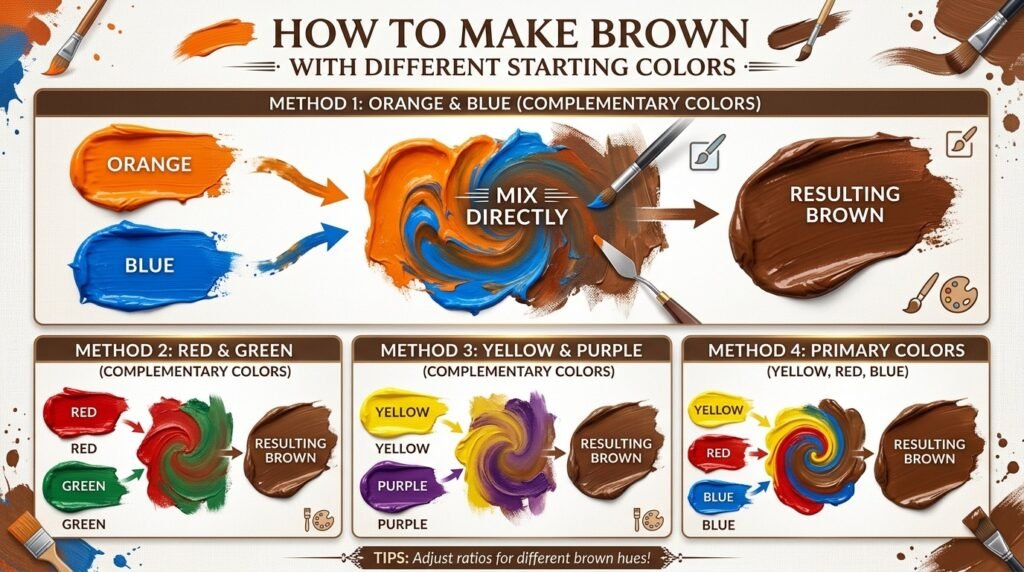
- Orange + Blue: Mix roughly equal parts for a balanced, natural brown — this is the fastest complementary-color method.
- Green + Red: Since green already contains blue and yellow, adding red creates a similar neutralizing effect, producing a slightly deeper, more olive-leaning brown.
- Purple + Yellow: Purple and yellow are also complementary, and mixing them in a roughly 1:2 ratio (more yellow) creates a warm, earthy brown.
Each of these alternate paths relies on the same color theory principle: mixing complementary colors cancels out saturation and pulls the result toward a neutral, brownish tone. So even without red, yellow, and blue specifically, any complementary pair can get you there with a little adjustment.
How to Make Brown Digitally (RGB/Hex)
If you’re working in Photoshop, Procreate, or CSS instead of physical paint, making brown digitally is much more precise, since you’re entering exact numbers instead of estimating a mix by eye.
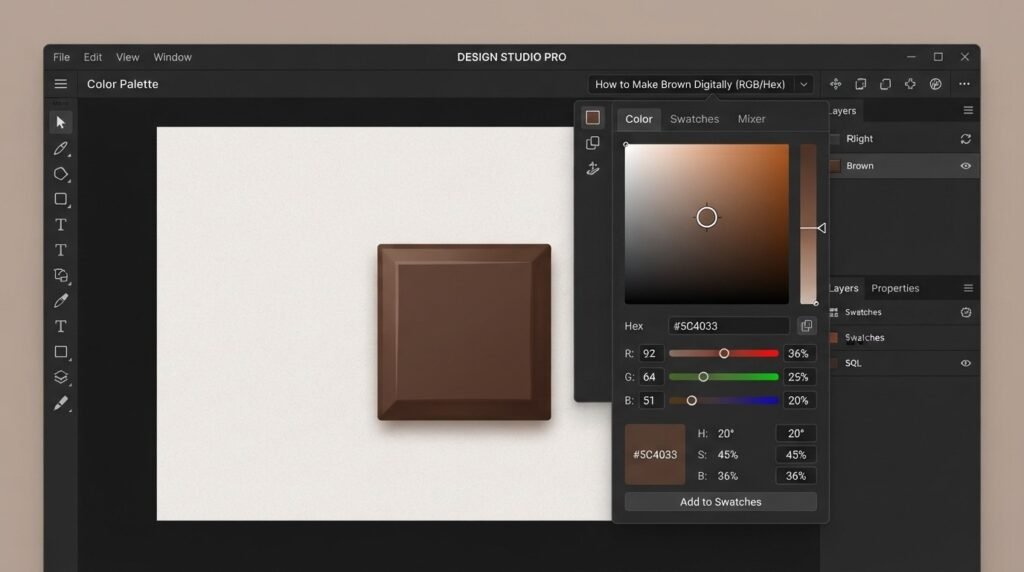
- Standard Brown Hex Code: #A52A2A
- RGB Values: R: 165, G: 42, B: 42
- CSS: background-color: #A52A2A; or background-color: brown;
To create brown digitally, open your color picker and either paste in the hex code directly or set the RGB sliders manually. For a warmer digital brown, raise the green value slightly (try RGB 150, 75, 0, or hex #964B00). For a cooler, more muted brown, lower the red value and raise blue slightly. Unlike paint, digital mixing lets you preview the exact result instantly, so there’s no guesswork involved once you know the target numbers.
Common Mistakes When Mixing Brown (and How to Fix Them)
Even with the right ratio, how to make brown mixes can still go wrong. Here are the most common issues:
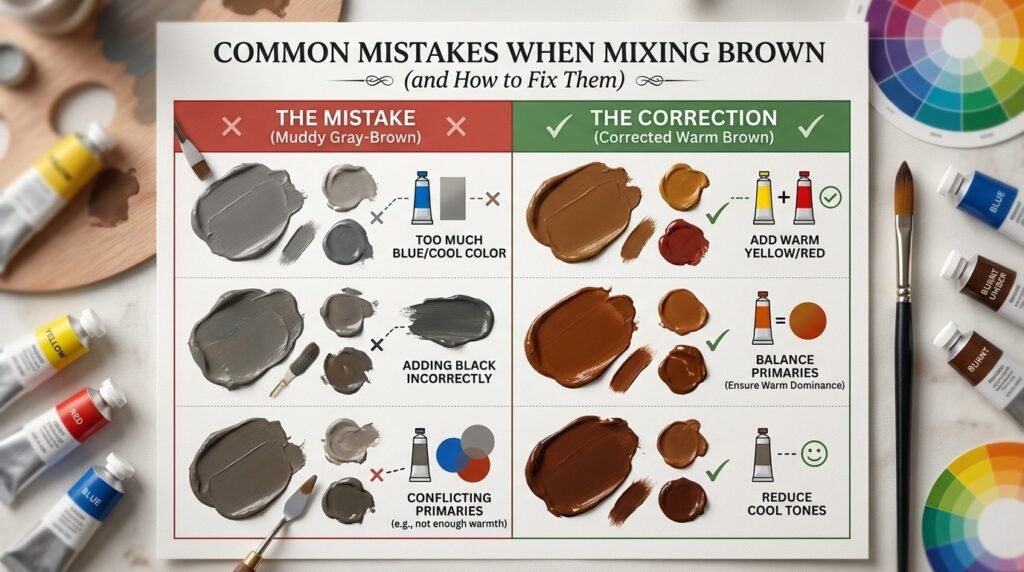
- Too gray or muddy: You’ve likely added too much blue or black. Fix it by mixing in a small amount of red or yellow to restore warmth.
- Too orange, not brown enough: You haven’t added enough blue yet. Add it in very small increments until the orange breaks into a true brown.
- Too pink or dull red-brown: This usually means too much red relative to yellow and blue. Balance it out with a touch more yellow.
- Too dark, losing detail: Adding black instead of blue to darken brown often kills its warmth entirely. Use a small amount of blue or a darker brown instead of pure black.
Most of these mistakes come down to one issue: overcorrecting one color at a time instead of adjusting gradually, which is why professional colorists often say mixing brown is a lot like seasoning soup — you can always add a little more, but you can’t take it back out, so go slow and taste-test as you go.
Tips for a Consistent, Vivid Brown
Getting the same brown twice takes a bit of discipline, especially if you’re mixing paint by hand rather than using digital codes.
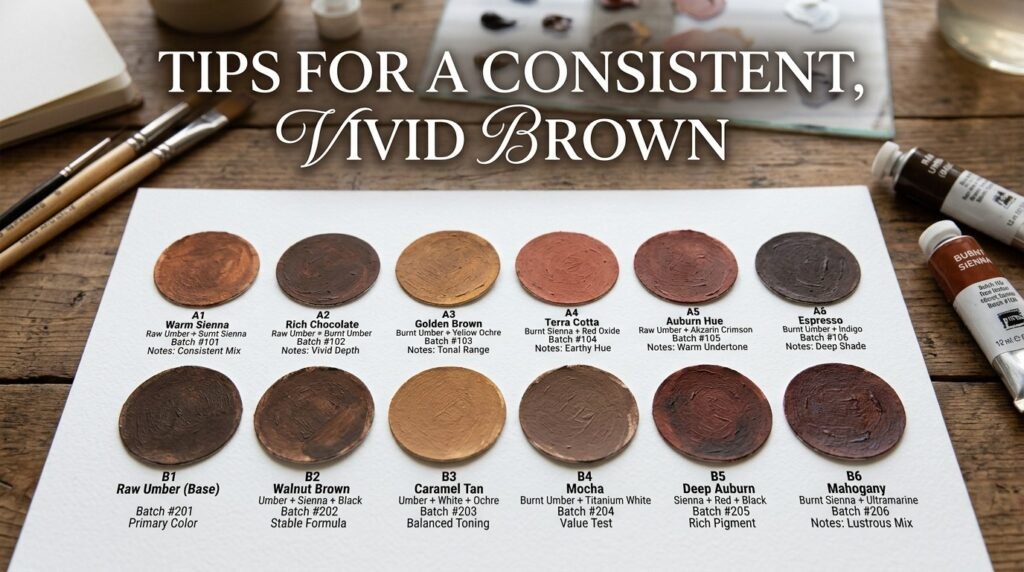
- Use quality pigments. Cheap paints often contain fillers that shift your brown toward gray faster than expected.
- Mix in small test batches first. Before committing to a full container, mix a small amount and let it dry — wet paint often looks darker or more saturated than the final dried color.
- Keep a ratio log. Write down your red-yellow-blue proportions once you find a brown you like, so you can recreate it exactly next time.
- Dry-test on your actual surface. Brown can look different on canvas versus paper versus wood, so always test on the material you’re actually using.
Following these habits makes how you make brown color less about luck and more about a repeatable process, especially useful if you’re mixing large batches for a mural, furniture project, or matching an existing paint color.
Real-Life Uses of Brown
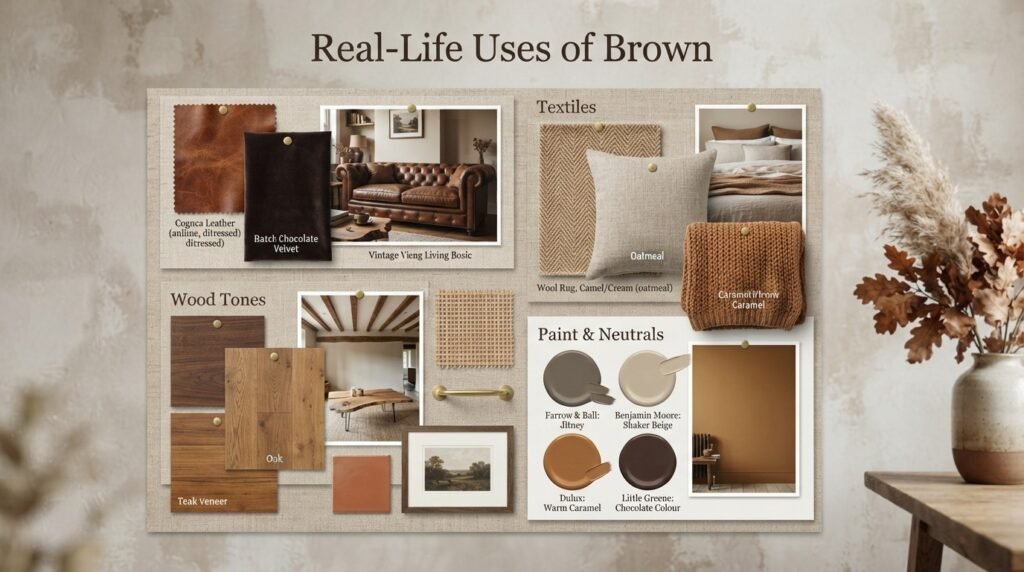
Brown shows up everywhere once you start noticing it. In fashion, brown is a wardrobe staple for fall and winter collections, often paired with cream, olive, or burnt orange for an earthy, layered look. In interior design, brown dominates wood furniture, flooring, and leather accents, and it’s frequently used as a grounding neutral that makes bolder accent colors pop without overwhelming a room.
Shades and Variations of Brown
Brown isn’t a single fixed color — it’s a whole family of related tones, each suited to different uses.
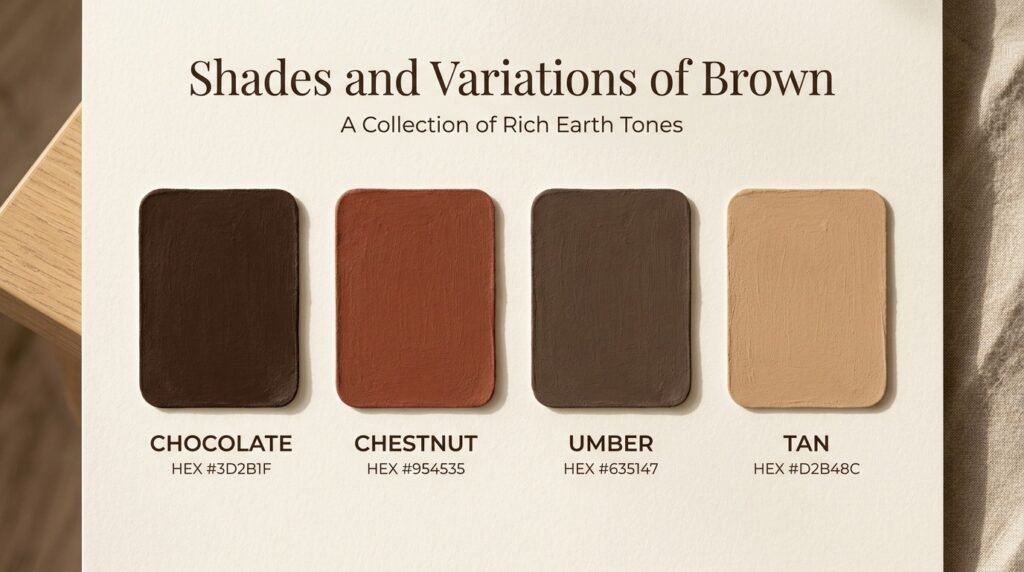
| Shade Name | Hex Code | Best Used For |
| Chocolate Brown | #5C3A28 | Furniture, rich interior accents |
| Chestnut Brown | #7B3F1E | Fashion, hair color, wood stain |
| Umber | #4B3621 | Fine art, deep shadow tones |
| Tan | #C8A27A | Light interiors, casual fashion |
Chocolate brown and umber both work well as deep, grounding tones in a room or painting, while chestnut and tan lean lighter and more approachable, making them better suited to everyday fashion and casual decor rather than dramatic accent pieces.
Where Brown Sits on the Color Wheel
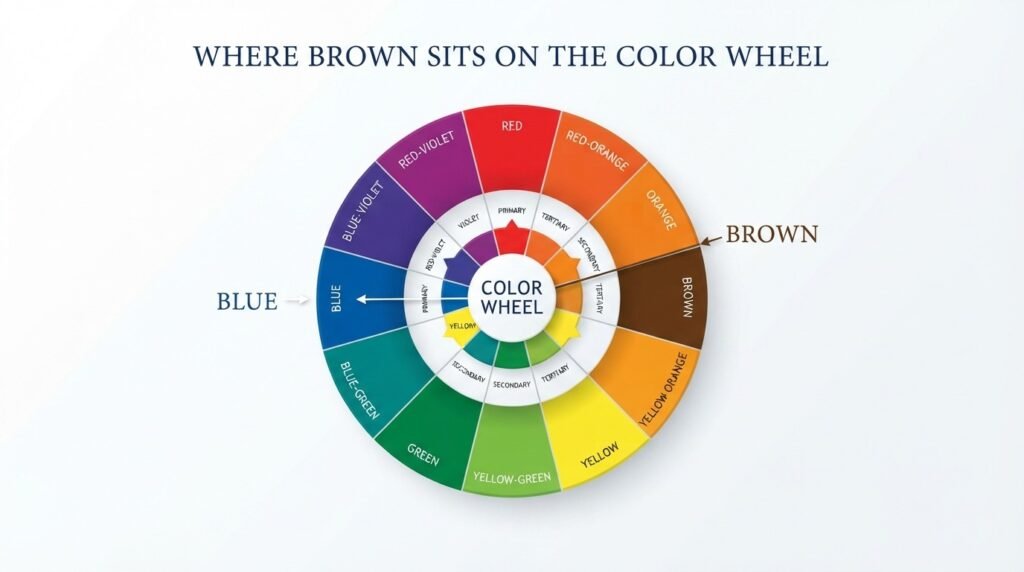
Brown sits closest to orange on the color wheel, since it’s essentially a darkened, desaturated orange rather than its own separate hue family. Its complementary color is blue, which is exactly why blue is the key ingredient that turns bright orange into neutral brown in the first place. Because it’s built from a mix of primary and secondary colors rather than sitting cleanly on the wheel itself, brown is generally classified as a tertiary, low-saturation neutral — useful as a background or grounding tone rather than a bold focal color. Analogous colors near brown include rust, ochre, and deep gold, all of which pair naturally with brown in warm, earthy color schemes.
Conclusion
At its core, how to make brown comes down to one simple formula: mix red, yellow, and blue in a roughly 2:2:1 ratio, or combine any complementary pair like orange and blue. From there, small adjustments in ratio let you shift toward warmer golds, cooler taupes, or deep chocolate tones depending on what you need. The best way to get comfortable with what colors make brown is simply to test small batches, track your ratios, and adjust one color at a time until you land on the exact shade you’re after.
FAQs About Making Brown
What colors make brown paint?
Brown paint is made by mixing red, yellow, and blue together, roughly in a 2:2:1 ratio, or by combining complementary colors like orange and blue.
How do you make brown color darker?
To darken brown without losing its warmth, add a small amount of blue rather than black, since black tends to flatten and dull the color instead of deepening it naturally.
Can you make brown without blue?
Yes, you can make brown by mixing orange and purple, or by combining red and green, since both pairs contain enough complementary color balance to neutralize into brown.
What two colors make light brown or tan?
Light brown or tan is made by mixing standard brown with white, gradually lightening it until it reaches a soft, warm beige tone.
Is brown a warm or cool color?
Brown is generally considered a warm color because of its close relationship to orange, though it can lean cooler when mixed with more blue or gray.
What is the hex code for brown?
The standard hex code for brown is #A52A2A, which corresponds to RGB values of 165, 42, 42.
Why does my brown paint look gray instead of brown?
Your brown likely has too much blue or black relative to red and yellow, which pulls it toward gray; adding a small amount of yellow or red back in usually restores a true brown tone.