What Color Does Yellow and Gray Make When Mixed? Muted Khaki Explained
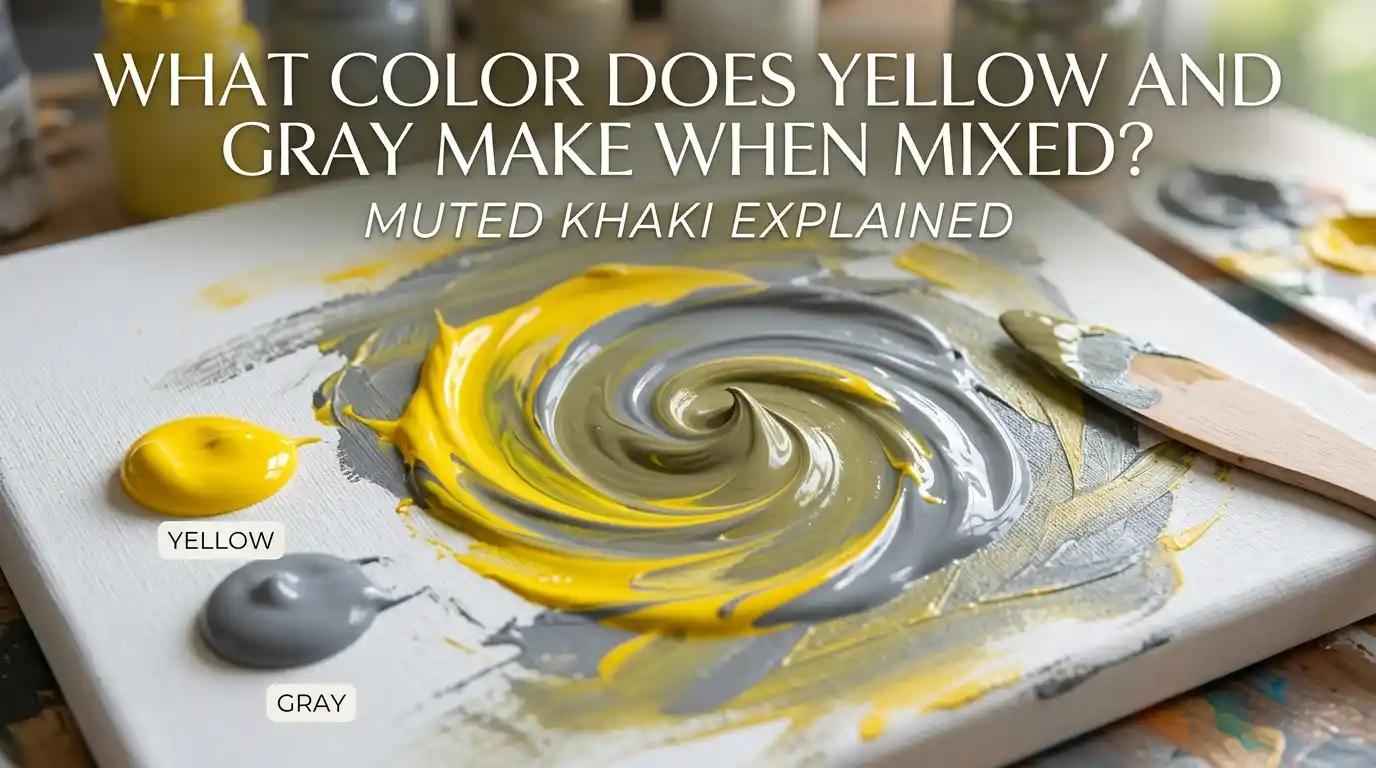
Main takeaway: If you’re asking what color does yellow and gray make, the short answer is a muted, dusty khaki-yellow. Yellow and gray mixed always produce a softened, toned-down yellow, and the exact shade depends on the ratio and pigments you use.
Have you ever mixed a bright yellow with gray and watched it turn into a soft, earthy tone you couldn’t quite name? It’s a common question for painters and designers alike. This guide answers what color does yellow and gray make in full detail, with paint ratios, light mixing, pigment charts, and practical tips.
Main takeaway: Yellow + Gray = Muted Khaki. The more gray you add, the duller and more neutral the yellow becomes.
Understanding Yellow and Gray as Colors
Before we answer what color yellow and gray make in different situations, it helps to understand what these two colors actually are.
Yellow is a primary color. It cannot be created by mixing other colors. It’s warm, bright, and energetic, sitting opposite violet on most color wheels.
Gray is different. It’s a neutral color, made by mixing black and white together. Gray doesn’t push a mix warm or cool on its own — instead, it mutes and softens whatever it touches.
This is exactly why the pairing matters. Yellow brings the warmth and brightness. Gray brings a calm, neutral quality. Together, they create a family of soft, earthy tones, from muted khaki to dusty olive-yellow.
Think of yellow as bright sunshine and gray as a cloudy overcast — the more clouds you add, the softer and duller the sunshine looks, but it never fully disappears.
What Color Do You Get When You Mix Yellow and Gray Paint?
This is the part most people search for directly:
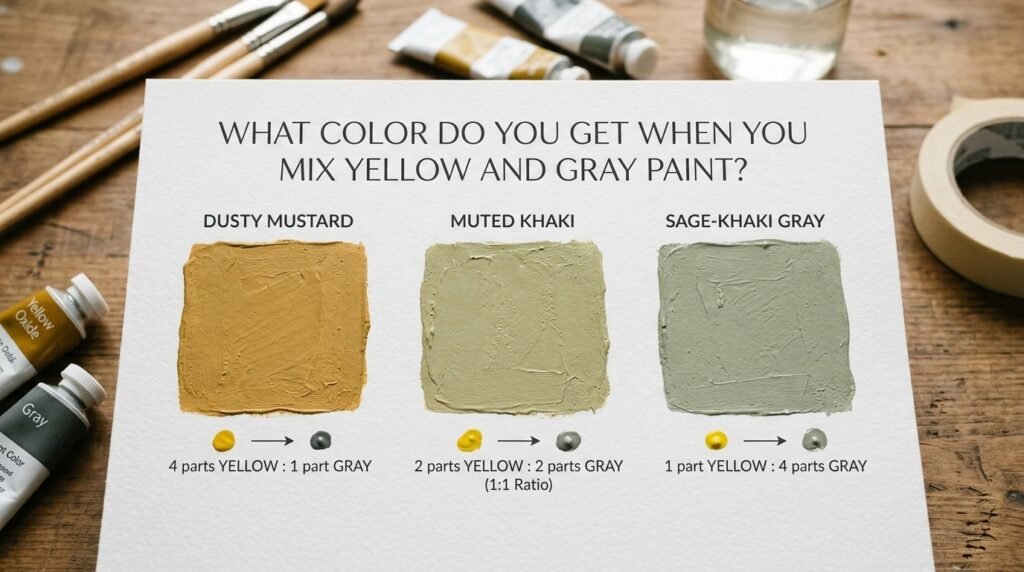
What color does yellow and gray make when mixed as paint?
Below are three common ratios and what each one produces.
1:1 Ratio (Equal Parts Yellow and Gray)
- Resulting color: Muted Khaki
- Hex code: #B5AC7E
- Use case: Great for earthy, natural-toned interiors or vintage-style illustrations.
2:1 Ratio (More Yellow Than Gray)
- Resulting color: Dusty Mustard
- Hex code: #C2B15C
- Use case: Works well for warm, rustic branding or autumn-themed designs.
1:2 Ratio (More Gray Than Yellow)
- Resulting color: Soft Sage-Khaki Gray
- Hex code: #A6A48E
- Use case: Popular in minimalist interiors and calm, neutral clothing palettes.
Beginner Tip: Always add gray to yellow a little at a time, not the other way around. Gray can quickly dull a bright yellow, so adding it slowly gives you much more control over the final shade.
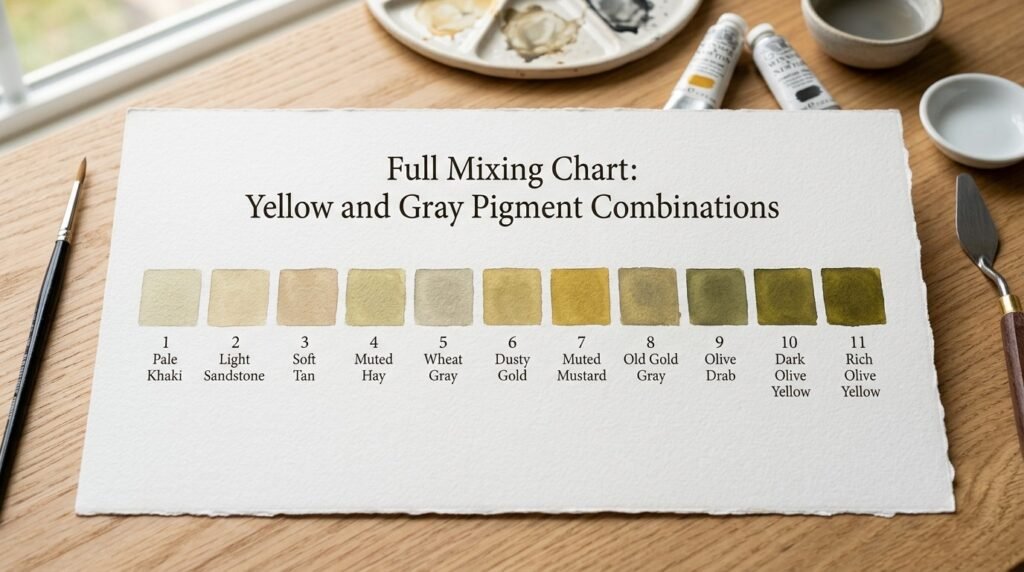
Full Mixing Chart: Yellow and Gray Pigment Combinations
Here’s a more detailed chart answering what color yellow and gray make across different pigment brands and ratios.
| Pigment A | Pigment B | Ratio | Resulting Color | Hex Code |
| Cadmium Yellow | Neutral Gray | 1:1 | Muted Khaki | #B5AC7E |
| Lemon Yellow | Cool Gray | 1:1 | Soft Sage-Yellow | #B9B98A |
| Cadmium Yellow | Neutral Gray | 2:1 | Dusty Mustard | #C2B15C |
| Yellow Ochre | Warm Gray | 1:2 | Muted Olive Gray | #9C9470 |
| Hansa Yellow | Neutral Gray | 1:1 | Faded Chartreuse Gray | #ADB07C |
| Cadmium Yellow | Cool Gray | 1:3 | Pale Khaki Gray | #C4C2A8 |
| Yellow Ochre | Neutral Gray | 1:1 | Warm Taupe-Yellow | #A69A76 |
| Lemon Yellow | Warm Gray | 1:2 | Dull Sage Yellow | #A6A582 |
| Hansa Yellow | Cool Gray | 2:1 | Rich Olive Yellow | #A6A04A |
| Cadmium Yellow | Warm Gray | 1:2 | Soft Golden Khaki | #B3A57E |
| Yellow Ochre | Cool Gray | 1:1 | Dusty Antique Gold | #9E9268 |
Image caption: A full swatch grid showing eleven muted yellow-gray shades ranging from pale khaki to rich olive yellow.
What Color Does Yellow and Gray Light Make?
So far we’ve covered paint, but what color do yellow and gray make when it comes to light instead of pigment? The answer changes here, and it’s worth understanding why.
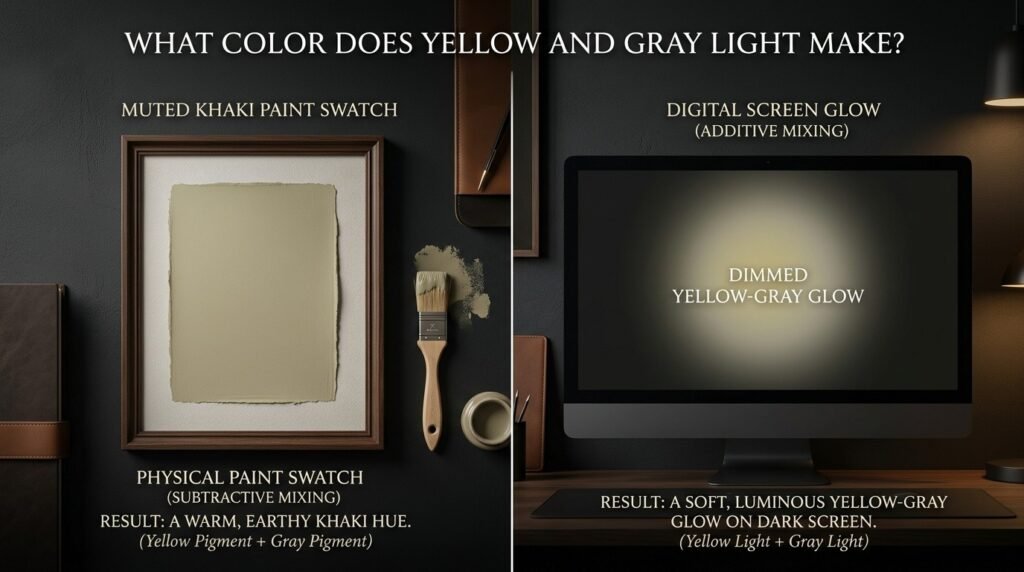
Paint mixing is subtractive. Each pigment you add absorbs more light and reflects less, which is why the mix gets progressively more muted.
Light mixing is additive. Yellow and gray light combine to create a soft, dimmed yellow glow — since gray light is really just balanced light layered at lower intensity, the result stays brighter and warmer than its paint counterpart.
Common use cases for yellow and gray light mixing:
- Warm neutral UI themes on apps and websites
- LED accent lighting for cozy, ambient spaces
- Stage and theater lighting for soft, warm scenes
- Branding for eco-friendly or earthy digital products
Subtractive vs. Additive Color Mixing: Side-by-Side
| Feature | Subtractive (Paint) | Additive (Light) |
| Base medium | Pigment | Light waves |
| Mixing yellow + gray makes | Muted khaki | Soft, dimmed yellow glow |
| More gray added | Duller, flatter yellow | Slightly dimmer, warmer yellow |
| Common tools | Paint, ink, dye | Screens, LEDs, stage lights |
| Example use | Wall paint, art | Ambient lighting, warm UI themes |
How Ratio Affects the Final Color
Ratio is the biggest factor in what color yellow and gray make. Here’s a quick reference table.
| Ratio (Yellow: Gray) | Resulting Color | Best Use Case |
| 3:1 | Rich Olive Yellow | Bold, earthy branding accents |
| 2:1 | Dusty Mustard | Rustic and autumn themes |
| 1:1 | Muted Khaki | General-purpose earthy tone |
| 1:2 | Sage-Khaki Gray | Minimalist interiors |
| 1:3 | Pale Khaki Gray | Soft, neutral backgrounds |
Beginner Tip: If your mix looks too flat, add a touch more yellow rather than starting over. A small addition often brings back the warmth without needing a full remix.
Why Your Mix Looks Muddy — and How to Fix It
Sometimes when people try to answer what color does yellow and gray make for themselves, the result looks dull or greenish-brown instead of a clean khaki. Here’s why that happens.
Common causes:
- Undertones clashing: Some grays lean cool (blue-based), others lean warm (brown-based). Mixing a cool gray with a warm yellow can create an unwanted greenish tint.
- Overmixing: Blending too long, especially with a dirty brush or palette, can introduce unwanted colors and dull the mix further.
- Cheap or chalky paint: Low-quality gray paint often contains fillers that flatten a yellow instead of softening it cleanly.
How to fix it:
- Use a clean palette and clean brush every time you mix.
- Choose a warm-toned gray to pair with yellow for a truer, cleaner khaki tone.
- Test small batches before committing to a full mix.
“A muddy khaki is like adding too much water to lemonade — the flavor’s still there, it’s just lost its brightness.”
Best Pigments to Mix for Clean Results
| Pigment Pair | Result | Notes |
| Cadmium Yellow + Neutral Gray | Classic Muted Khaki | Reliable, clean everyday tone |
| Yellow Ochre + Warm Gray | Warm Taupe-Yellow | Great for rustic, vintage looks |
| Hansa Yellow + Cool Gray | Faded Chartreuse Gray | Slightly cooler, fresher tone |
| Lemon Yellow + Warm Gray | Dull Sage Yellow | Softer, more subdued finish |
Mixing tips:
- Add gray gradually, testing on scrap paper or canvas as you go.
- Mix in natural light so you can see the true tone, not one skewed by artificial lighting.
- Keep notes on your ratios so you can recreate a shade you like later.
Real-Life Examples of Yellow and Gray Mixing
The answer to what color yellow and gray make shows up everywhere once you start looking.
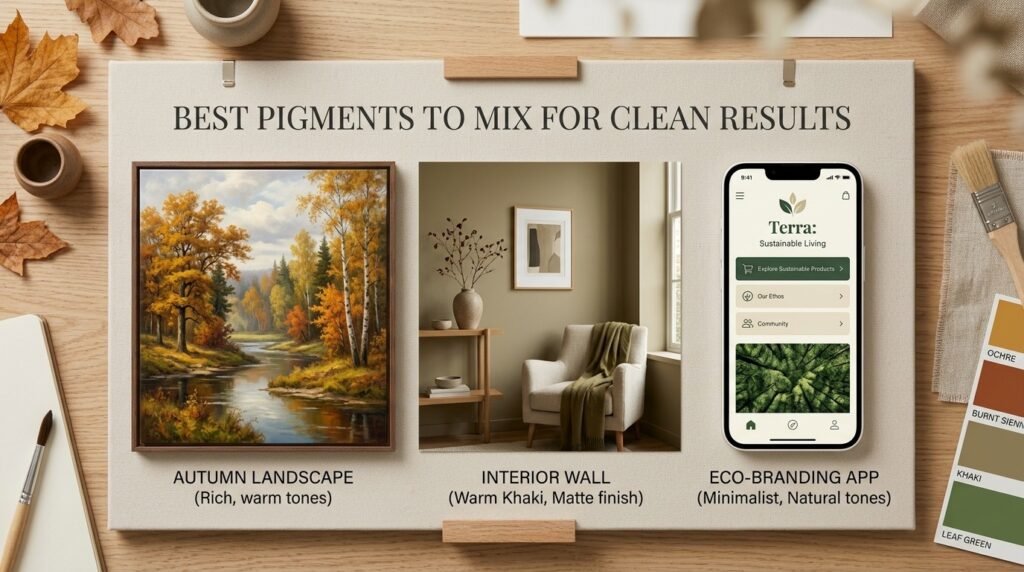
- Traditional art: Painters use yellow-gray mixes for autumn landscapes, dried grass, and soft, aged highlights in still-life work.
- Interior design: Muted khaki walls paired with white or wood trim have become a popular choice for calm, earthy living rooms and home offices.
- Digital media: Soft khaki and olive-yellow tones frequently appear in eco-branding, sustainable product packaging, and minimalist app palettes.
What Happens When You Add White, Yellow, or Black to Gray?
Once you understand what color does yellow and gray make, it’s useful to see how other modifiers change the result.
- Adding more gray: Produces a more muted, flatter yellow with less visible warmth. Example: #C4C2A8
- Adding white: Lightens the mix into a soft, pale cream-gray. Example: #DCD8C4
- Adding black: Deepens the mix into a dark, mossy olive tone. Example: #5C5A3E
Beginner Tip: Add modifiers one at a time and in tiny amounts. Gray already softens a mix quickly, so small adjustments go a long way.
Paint vs. Digital Media: A Closer Look
To fully answer what color yellow and gray make across mediums, it helps to compare paint and digital light directly.
In paint (subtractive mixing), yellow and gray pigment physically combine, and the result depends on pigment quality, undertone, and ratio. A typical mix might land around #B5AC7E.
In digital media (additive mixing), gray is created by combining light at reduced intensity, so blending it with yellow light produces a warmer, dimmed yellow that often looks slightly brighter than its paint counterpart, especially on screens.
This is why a “muted khaki” you see in an app’s color palette might look a touch more vivid than the same tone mixed with real paint.
Tips for Artists Mixing Yellow and Gray
- Choose your gray carefully. Warm-toned grays create cleaner khaki tones; cool-toned grays can shift the mix toward a greenish, muddier tone.
- Test on your actual palette first. Colors can look different once dry compared to wet.
- Layer instead of overmixing. For paintings, thin glazes of gray over yellow can create smoother, softer transitions than direct mixing.
- Keep a swatch journal. Recording ratios and results saves time on future projects.
Muted Khaki in Fashion and Interior Design
The muted khaki created when you mix yellow and gray has become a favorite in both fashion and home decor. Soft olive and mustard tones are common in casual, earthy wardrobes, while dusty khaki walls appear frequently in warm, minimalist interiors.
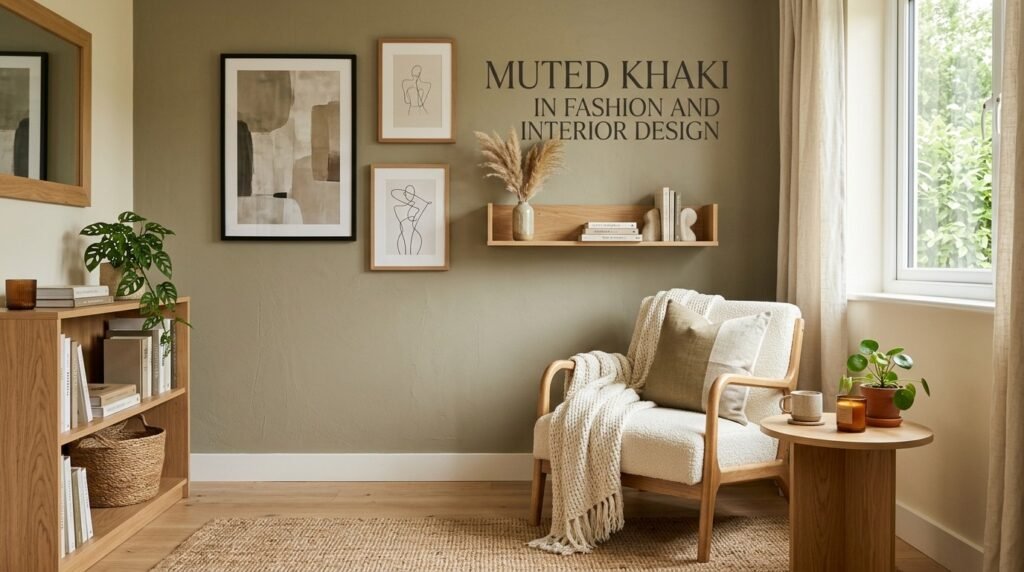
In interior design, muted khaki paired with white or natural wood accents has become a signature of the “modern earthy” aesthetic. If you’re planning a room refresh, testing a few yellow-gray paint ratios on a sample board — like the ones covered earlier in this guide — is a simple way to find the right tone before committing to a full wall.
Where Muted Khaki Sits on the Color Wheel
Muted khaki, the result of mixing yellow and gray, is technically a tone rather than a standalone wheel color, since it’s created by softening yellow with a neutral rather than mixing two hues.
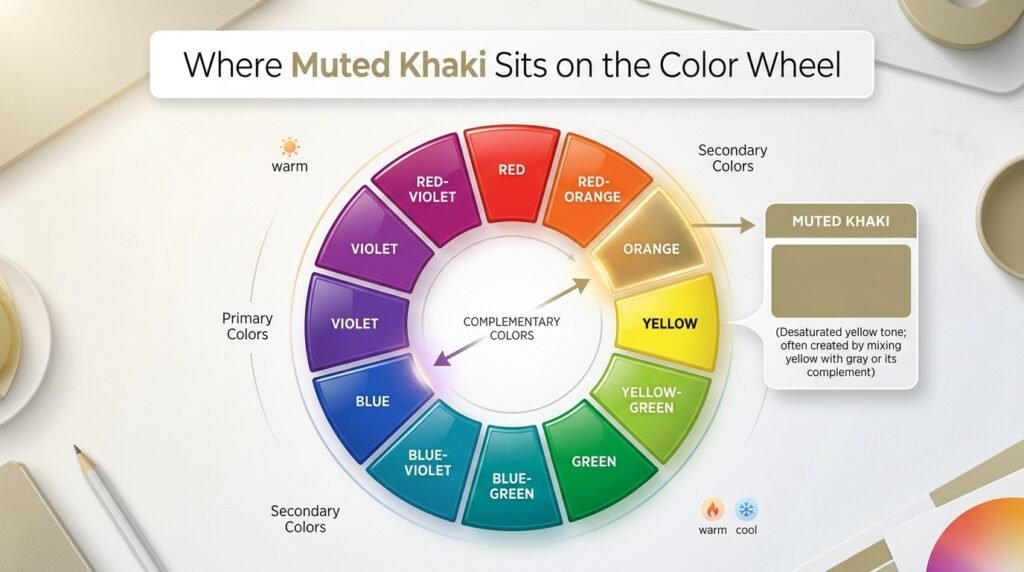
- Base color: Yellow (primary)
- Complementary color: Violet (opposite yellow on the wheel)
- Analogous colors: Yellow-green and yellow-orange
This means muted khaki pairs naturally with soft violets or plums for contrast, or with yellow-greens and yellow-oranges for a softer, more harmonious palette.
Conclusion
So, what does yellow and gray make when mixed? In paint, it’s always a version of muted khaki, with the exact tone shaped by ratio, pigment quality, and undertone. In light, gray simply softens and dims the yellow, keeping it slightly warmer and brighter than the paint version. Just remember: watch your ratios, keep your palette clean, and test small batches to avoid a muddy result. With a little practice, mixing yellow and gray becomes one of the easiest ways to create calm, earthy tones for any project.
FAQs
What color does yellow and gray make when mixed?
Yellow and gray always make a muted, softer shade of yellow, typically landing somewhere between dusty mustard and pale khaki gray depending on the ratio used.
What color do yellow and gray make in equal parts?
A 1:1 ratio of yellow and gray typically produces a classic muted khaki, often close to hex code #B5AC7E.
Do yellow and gray make a different color in light versus paint?
Yes. In paint, yellow and gray make a muted khaki through subtractive mixing. In light, gray simply softens and dims the yellow, keeping the result slightly warmer and brighter.
What color does yellow and gray make if you add more gray?
Adding more gray produces a flatter, more muted yellow with less visible warmth or brightness.
Why does my yellow and gray mix look muddy or greenish instead of khaki?
This usually happens due to clashing undertones, overmixing, or low-quality gray paint. Using a warm-toned gray and a clean palette usually fixes it.
What is the hex code for yellow and gray mixed?
A common muted khaki from a 1:1 yellow-gray mix is around #B5AC7E, though the exact hex code varies by pigment and ratio.
Is khaki a primary or secondary color?
Khaki isn’t a primary or secondary color on the traditional wheel — it’s a muted tone created by mixing yellow, a primary color, with neutral gray.