How to Fix Uneven Paint: Complete Step-by-Step Guide
You step back to admire your freshly painted wall, and something feels off. Patches look darker in one spot, lighter in another, and roller marks seem to catch the light at certain angles. Learning how to fix uneven paint starts with understanding why it happened in the first place, then working through a simple, methodical fix.
The good news is that uneven paint is almost always fixable without starting completely over. This guide walks through the most common causes, a clear step-by-step fix, and specific solutions for different types of unevenness, from streaks to roller marks to shiny patches.
Whether the problem showed up right after painting or only became noticeable once the wall fully dried, the same core troubleshooting approach applies in almost every case.
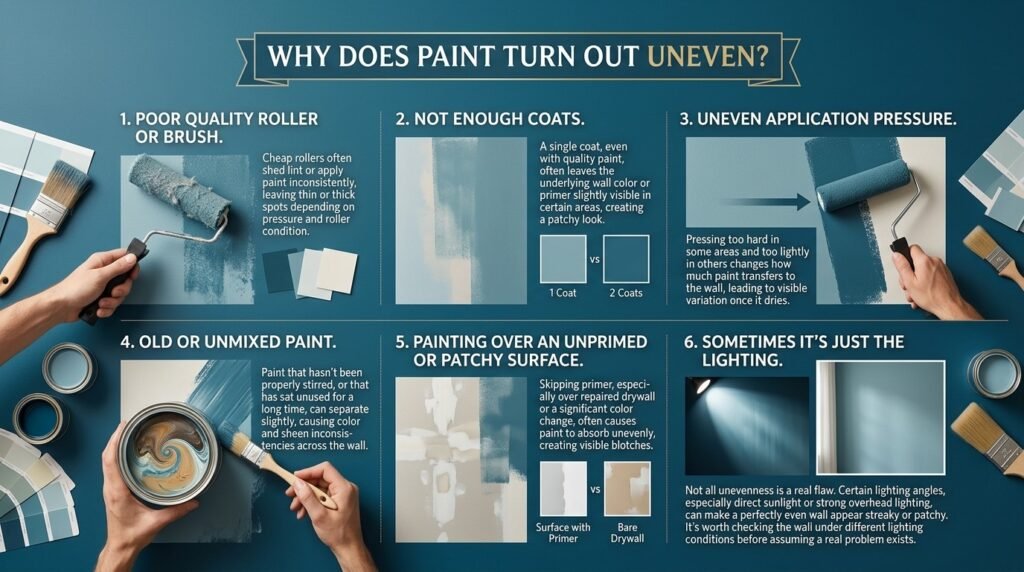
Why Does Paint Turn Out Uneven?
Before fixing the problem, it helps to understand what typically causes it.
Poor Quality Roller or Brush
Cheap rollers often shed lint or apply paint inconsistently, leaving thin or thick spots depending on pressure and roller condition.
Not Enough Coats
A single coat, even with quality paint, often leaves the underlying wall color or primer slightly visible in certain areas, creating a patchy look.
Uneven Application Pressure
Pressing too hard in some areas and too lightly in others changes how much paint transfers to the wall, leading to visible variation once it dries.
Old or Unmixed Paint
Paint that hasn’t been properly stirred, or that has sat unused for a long time, can separate slightly, causing color and sheen inconsistencies across the wall.
Painting Over an Unprimed or Patchy Surface
Skipping primer, especially over repaired drywall or a significant color change, often causes paint to absorb unevenly, creating visible blotches.
Sometimes It’s Just the Lighting
Not all unevenness is a real flaw. Certain lighting angles, especially direct sunlight or strong overhead lighting, can make a perfectly even wall appear streaky or patchy. It’s worth checking the wall under different lighting conditions before assuming a real problem exists.
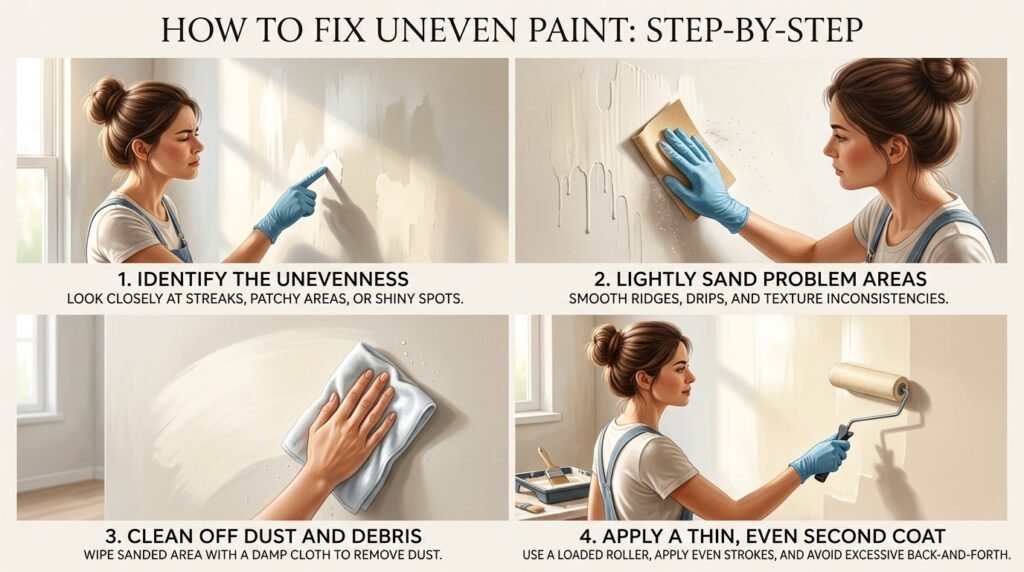
How to Fix Uneven Paint: Step-by-Step
Once you understand the likely cause, this process works for most situations where you need to know how to fix uneven paint on an already-dried wall.
Step 1: Identify the Type of Unevenness
Look closely at the wall to determine whether you’re dealing with streaks, patchy coverage, visible roller marks, or shiny versus dull spots. This distinction matters because the fix can vary slightly depending on the issue.
Step 2: Lightly Sand the Problem Areas
Using fine-grit sandpaper, gently smooth out any obvious ridges, drips, or texture inconsistencies. This creates a more even surface for the next coat to adhere to properly.
Step 3: Clean Off Dust and Debris
Wipe the sanded area down with a slightly damp cloth to remove all dust. Painting over dust particles can create new texture problems on top of the original issue.
Step 4: Apply a Thin, Even Second Coat
This is usually the core fix when learning how to fix uneven paint. Use a fully loaded but not dripping roller, and apply paint in smooth, even strokes, avoiding excessive back-and-forth motion that can create fresh texture inconsistencies.
Step 5: Blend the Edges Properly
Feather the edges of your touch-up area into the surrounding paint while it’s still wet, rather than stopping abruptly. This helps prevent a new visible line where the touch-up meets the original paint.
Step 6: Let It Dry and Reassess
Allow the area to dry fully before judging the result, since wet paint often looks different from how it will appear once cured. If unevenness is still visible, a light third coat may be necessary.
Fixing Specific Problems
Different types of unevenness sometimes need slightly different approaches.
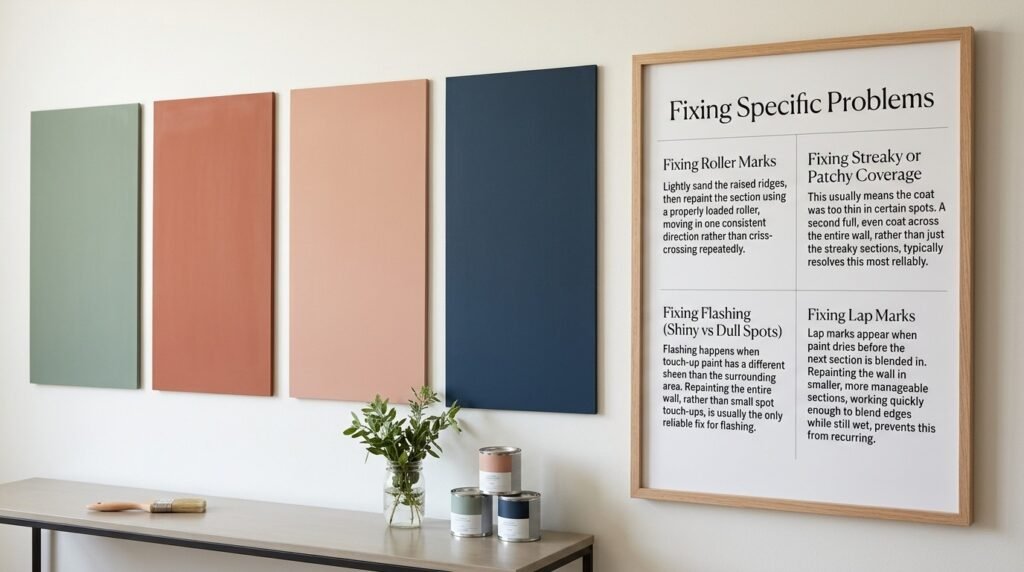
Fixing Roller Marks
Lightly sand the raised ridges, then repaint the section using a properly loaded roller, moving in one consistent direction rather than crisscrossing repeatedly.
Fixing Streaky or Patchy Coverage
This usually means the coat was too thin in certain spots. A second full, even coat across the entire wall, rather than just the streaky sections, typically resolves this most reliably.
Fixing Flashing (Shiny vs Dull Spots)
Flashing happens when touch-up paint has a different sheen than the surrounding area. Repainting the entire wall, rather than small spot touch-ups, is usually the only reliable fix for flashing.
Fixing Lap Marks
Lap marks appear when paint dries before the next section is blended in. Repainting the wall in smaller, more manageable sections, working quickly enough to blend edges while still wet, prevents this from recurring.
Tools That Help Achieve Even Coverage
The right tools make a noticeable difference in preventing future unevenness.
- A quality roller cover, since cheap rollers often apply paint inconsistently.
- An extension pole, which helps maintain consistent pressure and angle across the wall.
- Bright, even lighting while painting, so you can catch thin spots before the paint dries.
How to Prevent Uneven Paint Next Time
A few habits go a long way toward avoiding this problem altogether, and prevention is ultimately easier than learning how to fix uneven paint after the fact.
Always prime properly before painting, especially over repairs or significant color changes. Use a consistent technique, such as rolling in a “W” pattern before filling it in, rather than random strokes. Avoid overworking the paint once it starts to dry, since going back over partially dried paint is one of the most common causes of visible texture and streaking.
Keep Extra Paint for Touch-Ups
Save leftover paint from the original can, properly sealed and labeled with the date, so future touch-ups match exactly. Paint mixed at a different time, even from the same product line, can sometimes have slight color variation.
When to Just Repaint the Whole Wall
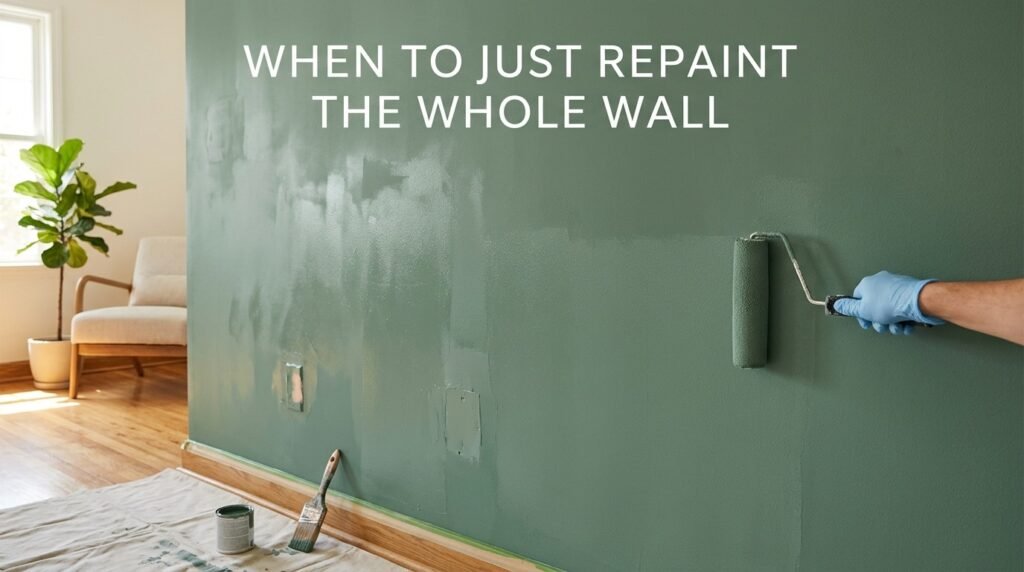
Sometimes, spot fixes create more problems than they solve, especially with flashing or significant patchiness. If more than a small section of the wall is affected, it’s usually faster and more reliable to repaint the entire wall with one or two even coats rather than trying to blend multiple touch-up areas. This approach also avoids the risk of visible seams between old and new paint.
Frequently Asked Questions
Why does my paint look patchy after drying?
Patchiness usually comes from an insufficient number of coats, inconsistent application pressure, or painting over an unprimed surface that absorbs paint unevenly.
Can you fix uneven paint without repainting the whole wall?
Yes, in many cases. Light sanding followed by a thin, well-blended touch-up coat can resolve minor unevenness, though larger areas may require a full repaint for the most reliable result.
Why does paint look different in certain lighting?
Lighting angle affects how texture and sheen reflect light, which can make an evenly painted wall appear streaky or inconsistent under strong directional lighting, even when there’s no real flaw.
How many coats fix uneven paint?
Most uneven paint issues resolve with one additional, properly applied coat, though a second touch-up coat is sometimes needed for full evenness.
Does the type of roller affect how even the paint looks?
Yes, significantly. A low-quality roller often applies paint inconsistently, while a quality roller cover distributes paint more evenly across the surface.
Is uneven paint always a mistake, or can it happen even with careful technique?
Even careful painters occasionally end up with minor unevenness, especially on textured walls or with certain paint formulas. Knowing how to fix uneven paint with a proper second coat is a normal part of most painting projects, not necessarily a sign of a major error.
Final Thoughts
Learning how to fix uneven paint comes down to identifying the specific cause, whether it’s a technique issue, a lighting illusion, or a genuine coverage problem, and applying a thin, well-blended coat to correct it. In most cases, a careful second coat resolves the issue completely.
If patchiness or flashing keeps showing up despite your best efforts, repainting the full wall with consistent technique is often the simplest, most lasting solution.