How Many Colors Are There? Everything You Need to Know
It sounds like a simple question. But how many colors are there, really? The honest answer depends on whether you’re asking a scientist, a paint brand, or a screen designer, and the answer changes each time.
This question becomes especially confusing when you’re standing in a paint aisle, staring at a wall of nearly identical shades, wondering why there are so many options in the first place. This guide breaks down the science behind color, how paint brands create thousands of named shades, and what it actually means for choosing colors in your own home.
Whether you’re simply curious or actively planning a room, understanding the real answer to how many colors are there can make color decisions feel far less overwhelming.
The Short Answer
Technically, there are infinite colors. Visible light exists on a continuous spectrum, meaning wavelengths shift so gradually that there are no true boundaries between one color and the next.

In practical terms, though, the human eye can distinguish somewhere between 1 million and 10 million distinct shades, depending on the individual and the study referenced. So when people ask how many colors are there, the real answer is: far more than we could ever name, but fewer than infinity as far as human perception is concerned.
How Many Colors Can the Human Eye See?
Our biology plays a huge role in how many colors we can actually perceive.
The Role of Cone Cells
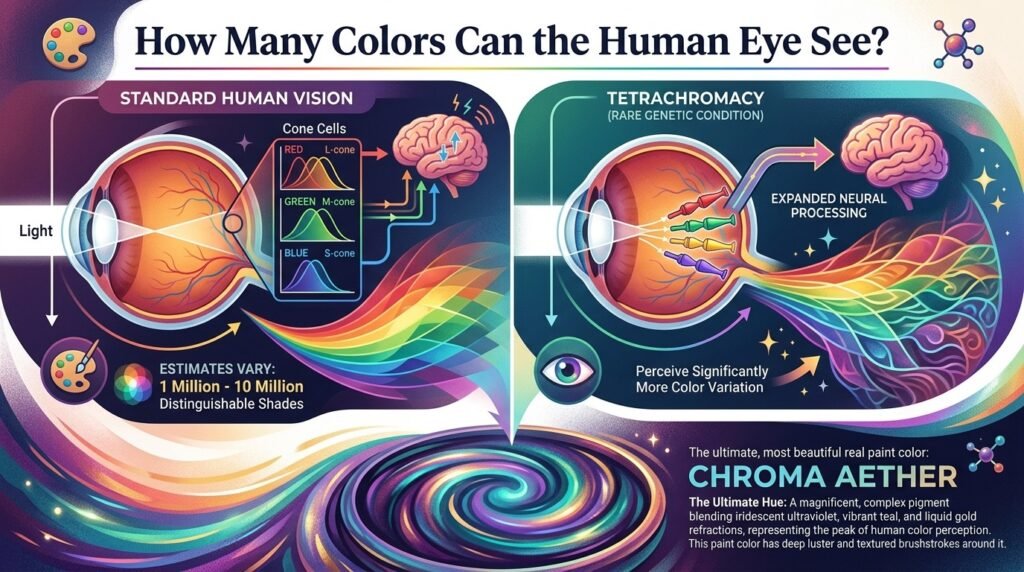
The human eye detects color using three types of cone cells, each sensitive to different wavelengths, roughly corresponding to red, green, and blue light. Every color we see is created by these three cone types working together and sending combined signals to the brain.
Why Estimates Vary
Because color perception depends on subtle differences in brightness, saturation, and hue, researchers don’t fully agree on an exact number. Some studies estimate around 1 million distinguishable shades, while others suggest the number could be closer to 10 million when accounting for subtle variations.
Tetrachromacy: People Who See More Colors
A small number of people, mostly women, carry a rare genetic condition called tetrachromacy, giving them a fourth type of cone cell. This may allow them to perceive significantly more color variation than the average person, adding yet another layer to the debate over how many colors are there for human eyes specifically.
How Many Colors Exist in Paint and Home Decor?
For anyone decorating a home, this is where the question of how many colors are there becomes genuinely practical.

Why Paint Brands Offer Thousands of Named Colors
Major paint brands often carry 3,000 or more named shades. This isn’t because there are thousands of truly distinct colors, but because tiny variations in undertone, saturation, and brightness are each given their own name for marketing and precision purposes. A brand might offer a dozen different “whites,” each with a slightly different warm or cool undertone.
How Many Colors Do You Actually Need in a Room?
Despite the endless options, most interior designers recommend using only three to five colors in a single room. A common approach is the 60-30-10 rule: 60% dominant color, usually walls, 30% secondary color for furniture and textiles, and 10% accent color for smaller details like pillows or art.
Undertones: Why Two “White” Paints Look Different
One of the most common decor frustrations is discovering that two seemingly identical whites look completely different once painted. This happens because of undertones, subtle hints of another color hiding beneath the main shade. A “white” paint might carry a faint blue, yellow, or gray undertone, which becomes more noticeable depending on lighting and surrounding colors.
How to Narrow Down Your Choices When Picking Paint
With so many options available, the real challenge isn’t a lack of colors; it’s knowing how to filter through them efficiently.
Start With What You Already Own
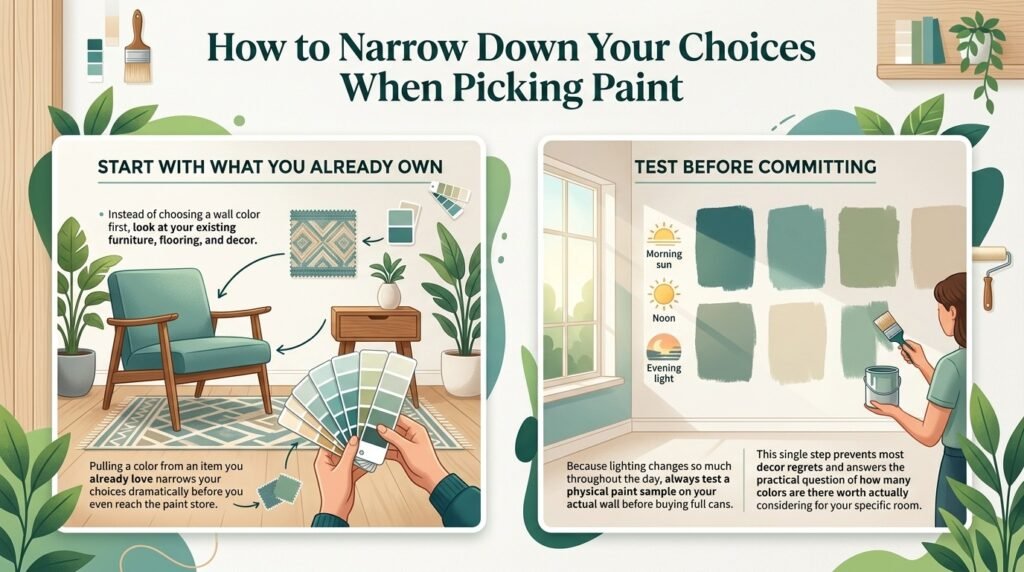
Instead of choosing a wall color first, look at your existing furniture, flooring, and decor. Pulling a color from an item you already love narrows your choices dramatically before you even reach the paint store.
Test Before Committing
Because lighting changes so much throughout the day, always test a physical paint sample on your actual wall before buying full cans. This single step prevents most decor regrets and answers the practical question of how many colors are there worth actually considering for your specific room.
How Many Colors Are There in Digital Design vs Paint?
Digital screens and physical paint follow very different rules, which explains another common source of confusion.
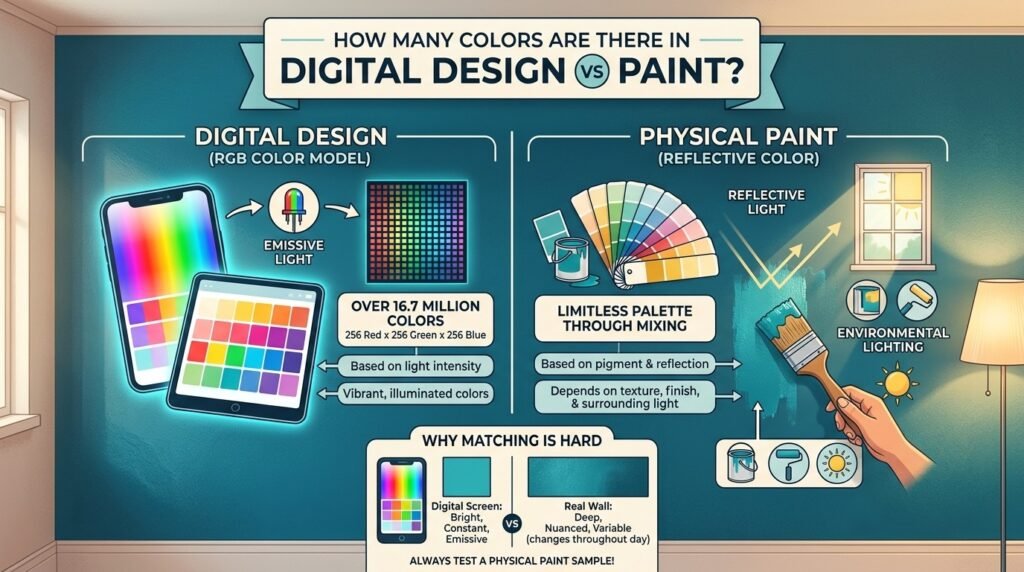
The RGB Color Model
Digital screens typically use the RGB model, combining red, green, and blue light at varying intensities to produce roughly 16.7 million possible colors. This number comes from 256 possible values for each of the three color channels, multiplied together.
Why a Screen Color Never Quite Matches the Wall
This is one of the most frustrating decor problems: a paint color looks perfect on a screen or in a photo, but looks completely different once applied to an actual wall. Screens emit light directly, while painted walls reflect light, which changes how the color appears depending on the room’s lighting. This is exactly why designers always recommend testing a physical paint sample before committing to a full room.
How Many Colors Should You Use When Decorating a Room?
Beyond the 60-30-10 rule, there are a few common color scheme approaches worth knowing.

Monochromatic Schemes
This approach uses different shades and tints of a single color, creating a calm, cohesive look that feels intentional without being busy.
Complementary Schemes
This pairs colors from opposite sides of the color wheel, such as navy and warm orange, creating bold contrast and visual energy.
Analogous Schemes
This uses colors that sit next to each other on the color wheel, such as blue, teal, and green, producing a soft, naturally blended look.
How Many Colors Are There in Nature?
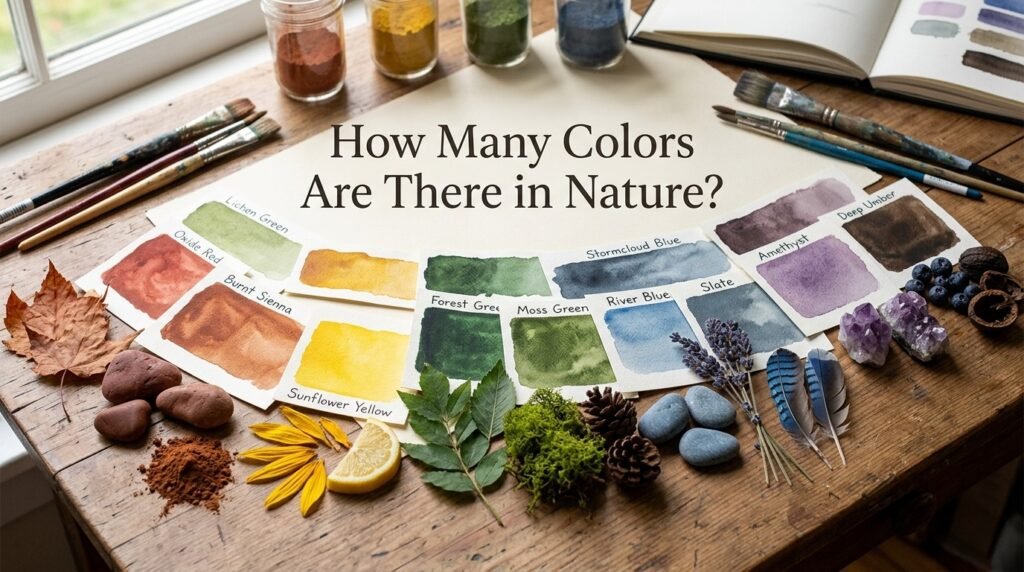
Stepping back from paint and design, nature itself offers a helpful reminder of just how vast color really is. Visible light spans wavelengths roughly between 380 and 700 nanometers, and within that narrow band, colors shift so smoothly that no fixed number can capture them all. This is the same principle behind why a rainbow appears to have distinct color bands, even though it’s really a single, continuous gradient of light.
Fun Facts About Color Perception
A few surprising facts make this topic even more interesting.
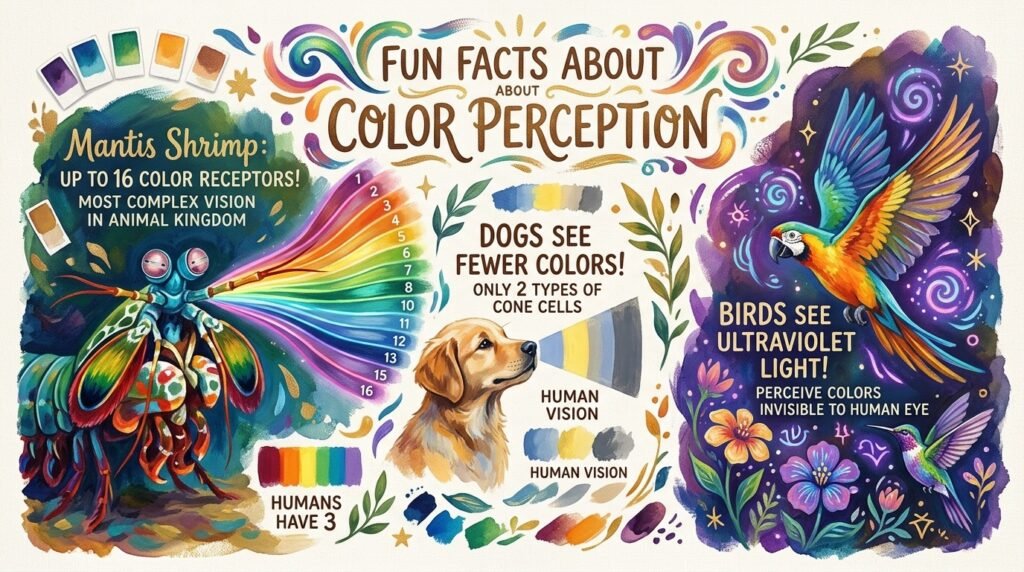
- Mantis shrimp have up to 16 types of color receptors, compared to just three in humans, giving them one of the most complex color vision systems in the animal kingdom.
- Dogs see far fewer colors than humans, since they only have two types of cone cells instead of three.
- Some birds can see ultraviolet light, allowing them to perceive colors that remain completely invisible to the human eye.
Frequently Asked Questions
How many colors can the human eye see?
Most estimates place the number between 1 million and 10 million distinguishable shades, depending on individual variation and the study referenced.
How many paint colors should I use in one room?
Most designers recommend three to five colors per room, following the 60-30-10 rule for a balanced, cohesive look.
Why does paint look different on the wall than on the swatch or screen?
Lighting plays a major role. Screens emit light directly, while painted walls reflect ambient light, which shifts how the color appears in real life.
How many colors are in RGB?
The RGB color model can produce approximately 16.7 million distinct colors by combining red, green, and blue channels at varying intensities.
Is there an actual limit to how many colors exist?
In theory, no. Visible light forms a continuous spectrum, meaning colors blend infinitely. The limit comes from human perception, not from light itself.
How many paint swatches should I compare before choosing?
Most designers suggest narrowing your options down to three to five finalists before testing physical samples, rather than trying to compare dozens of swatches at once.
Final Thoughts
So, how many colors are there? Technically, infinite. Practically, somewhere in the millions, based on what the human eye can actually distinguish. And when it comes to decorating your home, the real number that matters is much smaller: just three to five well-chosen shades, thoughtfully balanced, are usually all it takes to create a beautiful, cohesive room.
The next time you feel overwhelmed by a wall of paint swatches, remember that you don’t need to consider all of them. You just need the right few.