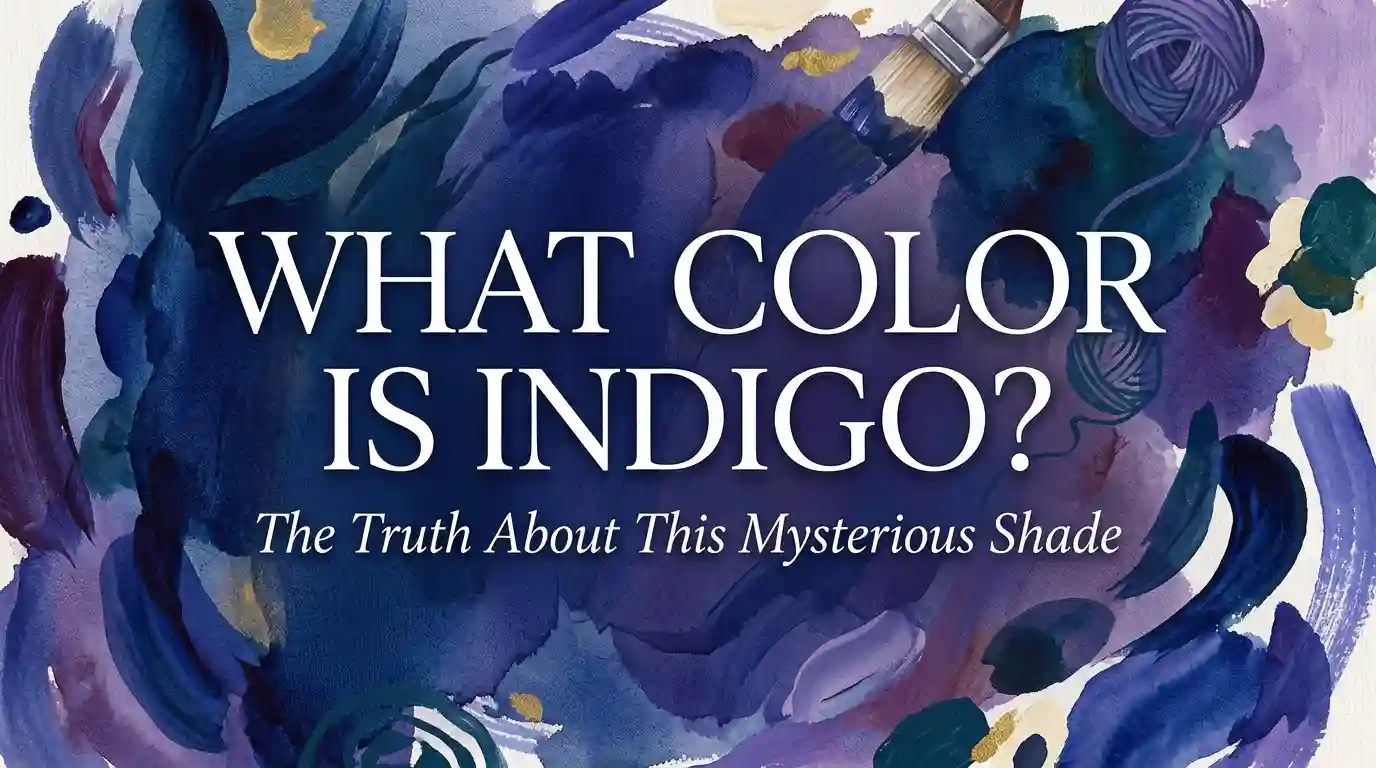
What Color Is Indigo? The Truth About This Mysterious Shade
Most people can point to red, blue, or green without hesitation. But ask someone what color indigo is, and you’ll often get a pause, followed by an uncertain guess. Is it blue? Purple? Somewhere in between?
Indigo has a strange place in color history. It’s one of the seven official rainbow colors, yet it’s also one of the most debated and misunderstood. This article breaks down exactly what indigo looks like, where it came from, and why so many people struggle to identify it.
From ancient dye trade routes to modern denim jeans, indigo has traveled a long way to become part of everyday language. Yet despite how often the word comes up, most people can’t confidently describe the actual shade when asked directly.
The Short Answer
Indigo is a deep, rich shade that sits between blue and violet on the color spectrum. It’s darker and more saturated than a typical blue, with a subtle purple undertone. In terms of wavelength, indigo falls roughly between 420 and 450 nanometers, placing it just past blue and before violet.

If you’re still wondering what color is indigo in simple terms, think of a very dark blue-purple, similar to the color of blue jeans or a twilight sky just after sunset.
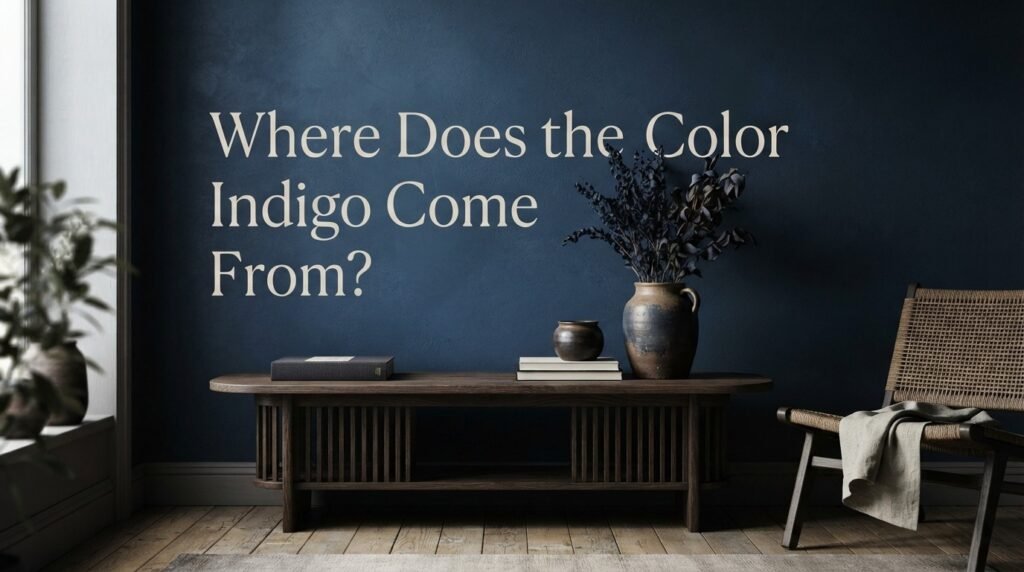
Where Does the Color Indigo Come From?
Indigo isn’t just a modern color name. It has deep roots in both nature and history.
The Indigo Plant
The color takes its name from the indigo plant (Indigofera tinctoria), which has been used for centuries to create a natural blue-purple dye. This plant-based dye was historically one of the most valuable trade goods in the world, used to color fabric across Asia, Africa, and eventually Europe.
From Dye to Color Name
Long before indigo was considered a rainbow color, it was simply known as a dye. Its popularity in textiles, especially in the production of denim, cemented its place as a widely recognized color name, even before Isaac Newton formally added it to his color spectrum model.
Indigo’s History Across Cultures
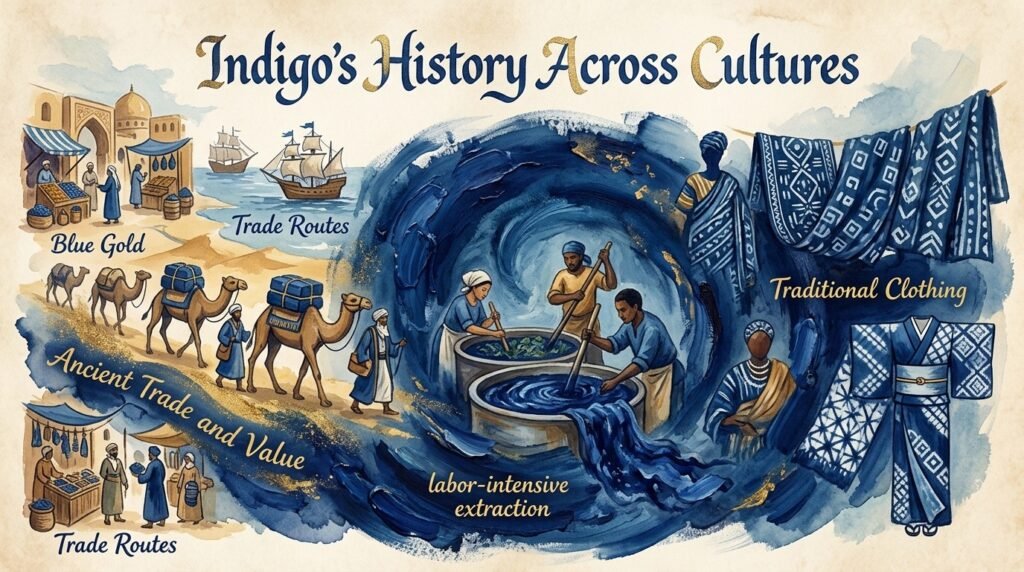
Understanding what color is indigo also means understanding how differently it has been valued around the world throughout history.
Ancient Trade and Value
Indigo dye was once so valuable that it was referred to as “blue gold” in some trade regions. Merchants transported it along major trade routes connecting Asia, the Middle East, and Europe, and it was often more expensive than many other dyes of its time because of how labor-intensive the extraction process was.
Indigo in Traditional Clothing
In many cultures, indigo-dyed fabric held symbolic meaning beyond just decoration. In parts of West Africa, for example, indigo-dyed cloth was historically associated with status and was sometimes reserved for special ceremonies.
Why Is Indigo Part of the Rainbow?
To understand what color is indigo and why it holds a place in the rainbow, it helps to look at its scientific origin.
Isaac Newton’s Decision
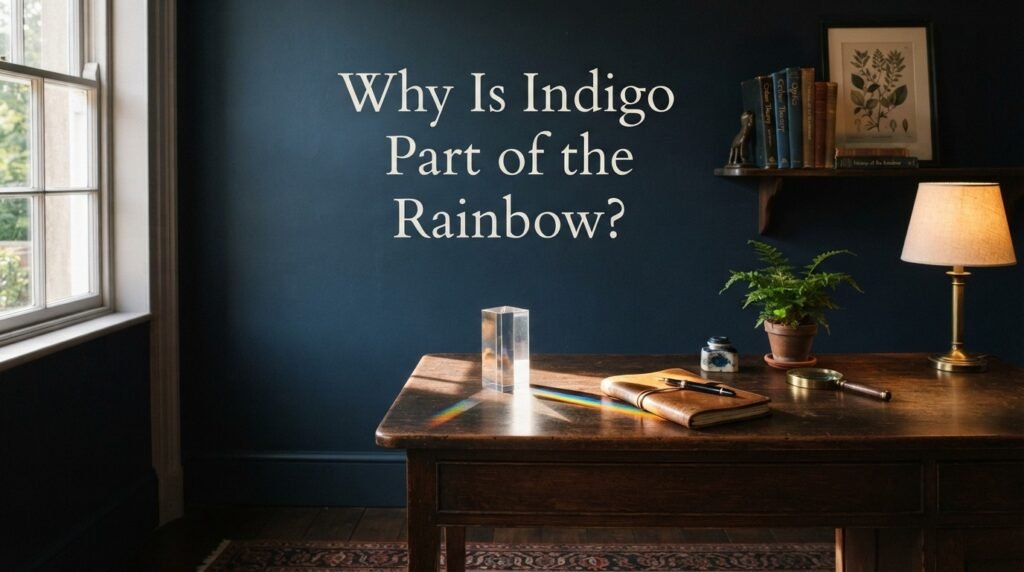
In the 17th century, Isaac Newton originally identified only five colors when he split light through a prism. He later expanded this to seven, adding orange and indigo. Newton was influenced by the idea that seven was a significant number, tying his color model to the seven notes of a musical scale.
This means indigo’s inclusion wasn’t purely based on how distinctly the human eye could separate it from blue and violet. It was partly a deliberate choice to reach a symbolic number.
Is Indigo Really a Distinct Color?
This is where things get genuinely debated among scientists and color experts, and it’s central to understanding what the color indigo truly represents.
The Case Against Indigo
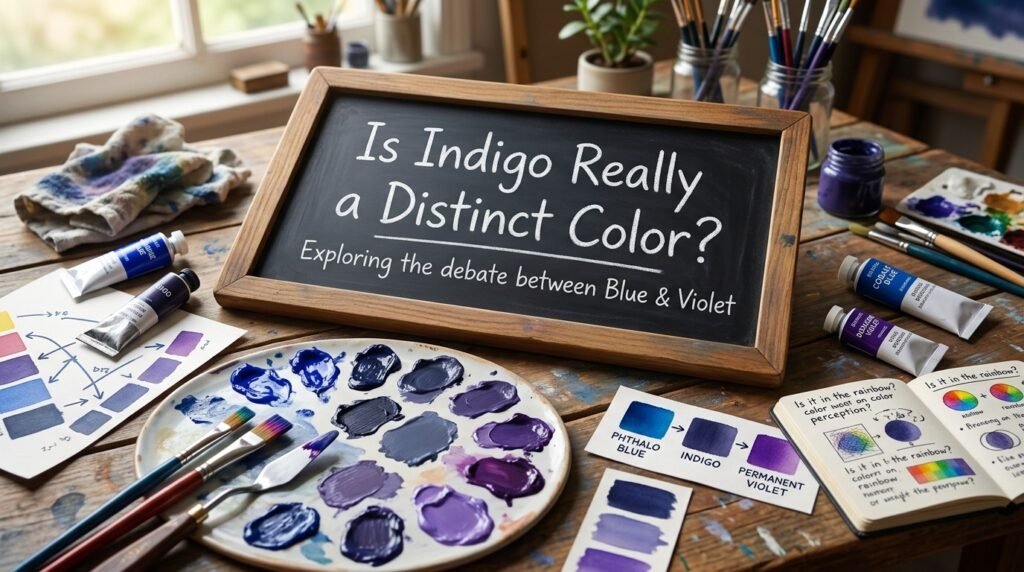
Many modern researchers argue that indigo isn’t visually distinct enough from blue and violet for most people to reliably identify it as its own separate band in a rainbow. When people are shown a rainbow and asked to point out indigo, many either merge it with blue or skip over it entirely.
The Case for Indigo
Others argue that indigo does have a genuinely unique visual identity, especially when compared side by side with pure blue or violet. Its slightly deeper, more muted tone gives it a distinct character, even if it’s harder to isolate within a continuous spectrum like a rainbow.
Indigo vs Similar Colors
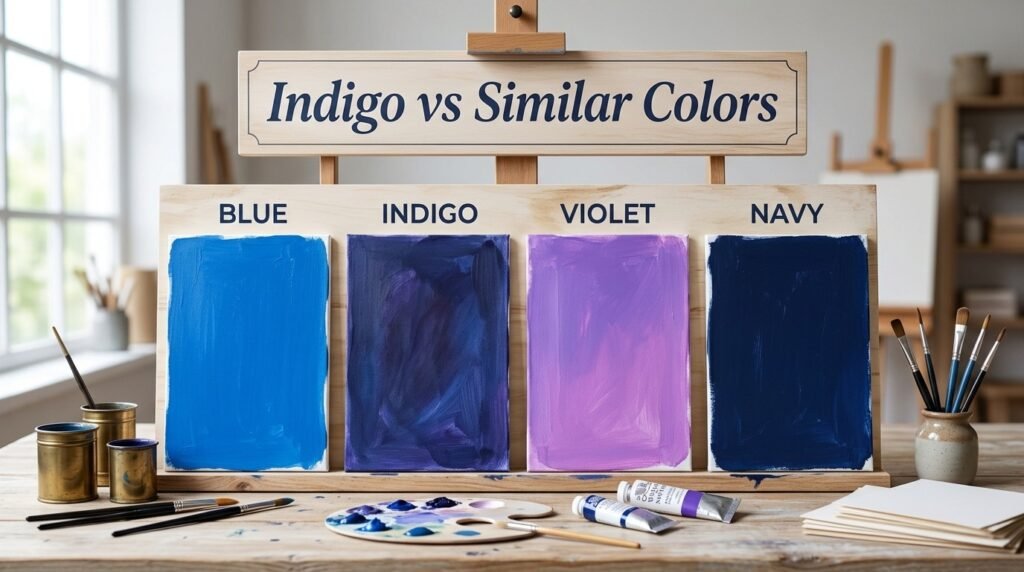
Because indigo sits so close to other shades, it’s often confused with them. If you’re trying to nail down exactly what color indigo is compared to its neighboring shades, here’s how it compares.
Indigo vs Blue
Standard blue is brighter and more primary, while indigo carries a deeper, slightly purple undertone. Indigo generally appears darker and more muted than typical blue.
Indigo vs Violet
Violet leans more clearly toward purple and pink undertones, while indigo stays closer to the blue end of the spectrum. Violet is also generally lighter and more vibrant than indigo.
Indigo vs Navy
Navy blue and indigo are often mistaken for one another. Navy is a very dark blue with minimal purple tint, while indigo has a noticeably stronger purple undertone.
Where You See Indigo in Everyday Life
Even if the exact shade feels hard to pin down, indigo shows up more often than most people realize.

- Denim jeans are traditionally dyed using indigo dye extracted from plants.
- Art and design, where indigo is used to add depth without the harshness of pure black or navy.
- Nature appears in certain flowers, deep twilight skies, and some butterfly wings.
- Branding and fashion, where indigo is often chosen for a premium, calming aesthetic.
Beyond these common examples, indigo also appears in interior design, particularly in accent walls and textiles, where its deep tone adds richness without feeling as harsh as pure black or as cold as navy. Many designers favor it for creating a sense of depth in a room while still keeping the space feeling calm and grounded.
How to Create the Color Indigo
If you’re a designer, painter, or just curious, knowing how to mix indigo helps make the shade easier to recognize.

Mixing Indigo With Paint
Indigo can be created by mixing blue and a small amount of violet or purple. Adding a touch of black can deepen the tone further, but too much will push it toward navy instead of true indigo.
Indigo in Digital Design
In digital color codes, indigo is commonly represented by the hex code #4B0082. This code produces a deep, rich blue-purple that closely matches the traditional understanding of the color.
Frequently Asked Questions
What color is indigo closest to?
Indigo sits closest to a deep blue with a purple undertone, positioned between blue and violet on the color spectrum.
Is indigo more blue or more purple?
Indigo leans slightly more toward blue than purple, though it carries a noticeable purple undertone that separates it from standard blue.
Why do some people say indigo isn’t a real color?
Some color scientists argue that indigo isn’t visually distinct enough from blue and violet for most human eyes to reliably separate it as its own category, which is why the debate continues.
Is indigo the same as navy blue?
No. Navy blue is a very dark blue with little to no purple tint, while indigo has a stronger, more noticeable purple undertone.
Why is indigo used in denim?
Indigo dye has been historically used for denim because of its natural availability, colorfastness, and the unique way it fades attractively over time with wear and washing.
What is the hex code for indigo?
The standard hex code for indigo is #4B0082, which produces a deep blue-purple shade commonly used in digital design.
Final Thoughts
So, what color is indigo? It’s a deep, rich shade that sits between blue and violet, carrying just enough purple undertone to give it a unique identity. While scientists still debate whether it deserves its own place in the rainbow, there’s no denying that indigo has earned a lasting spot in fashion, art, and everyday life.
Next time you spot a pair of dark denim jeans or a deep twilight sky, take a closer look. You might just be looking at indigo.