

How to Remove Paint From Clothes: Easy Fixes, Home Remedies & Tips
A paint stain on your favorite shirt can ruin your whole day. Maybe you were touching up a wall, working on an art project, or just brushed against a freshly painted surface. Either way, that bright splash of color on fabric feels like a disaster in the moment.
The good news is that knowing how to remove paint from clothes makes this problem far less scary than it seems. The method depends on a few key factors: whether the paint is wet or dry, and whether it’s water-based, oil-based, or spray paint. This guide covers every scenario, with simple home remedies you likely already have in your kitchen or bathroom.
Whether you’re a parent dealing with an art-class accident, a DIY painter who brushed against your sleeve, or someone who just discovered an old forgotten stain, this article walks you through every step, from the first few seconds after the spill to what to do if the stain has already dried in.
Why Paint Stains Are Tricky to Remove
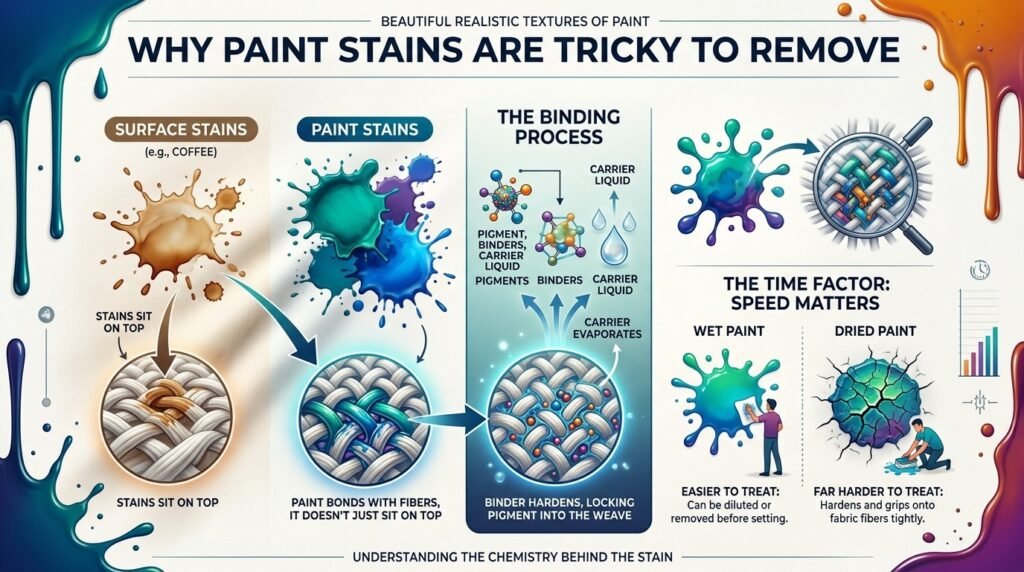
Paint isn’t like a typical food or dirt stain. It doesn’t just sit on top of fabric — it bonds with the fibers as it dries, which is exactly why timing matters so much.
The Time Factor
A wet stain is far easier to treat than a dried one. Once paint dries, it hardens and grips onto fabric fibers tightly. This is why the very first step in removing paint from clothes successfully is always speed. The sooner you treat it, the higher your chances of full removal.
How Paint Interacts With Fabric
Paint is made of pigment, binders, and a carrier liquid, whether that’s water or a solvent. As the carrier evaporates, the binder hardens and locks the pigment into the fabric’s weave. This is different from something like a coffee or juice stain, which mostly sits on the surface. Understanding this process explains why some methods work on one type of paint but completely fail on another.
Know Your Paint Type First
Different paints react differently to solvents and cleaning agents. Identifying the type before you start saves time and prevents fabric damage.

Water-Based (Latex/Acrylic) Paint
This is the most common type used for walls and household projects. It’s water-soluble when wet, which makes early treatment much easier.
Oil-Based Paint
Oil-based paint is thicker, more durable, and far more stubborn on fabric. It typically requires a solvent like mineral spirits or rubbing alcohol.
Spray Paint
Spray paint dries almost instantly and bonds quickly with fabric. It usually needs a stronger solvent approach, even when caught early.
How to Remove Wet Paint From Clothes
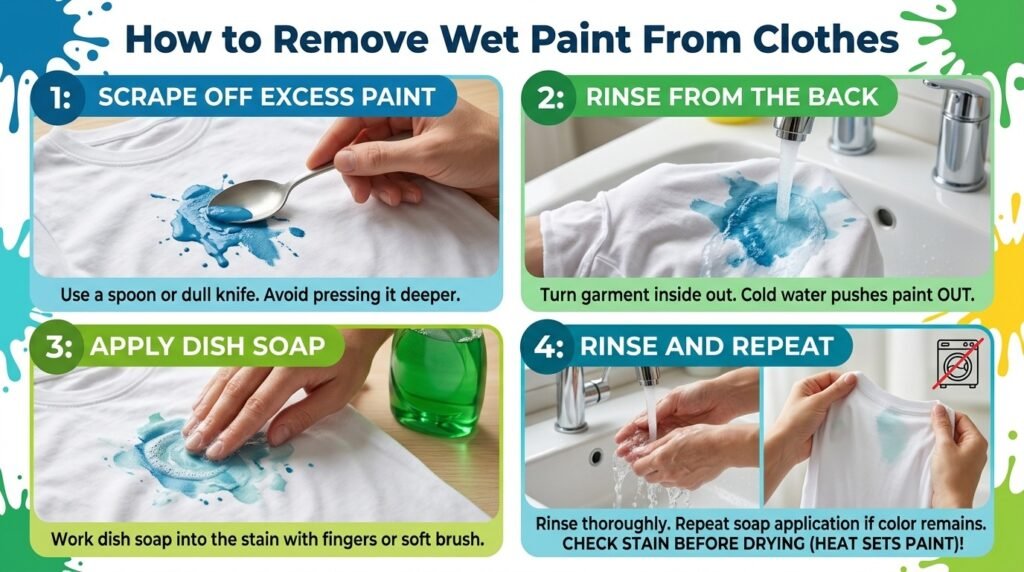
Acting fast gives you the best possible outcome. This is the easiest scenario for removing paint from clothes, since the paint hasn’t had time to bond with the fabric yet. Here’s exactly what to do.
Step 1: Scrape Off Excess Paint
Use a spoon or dull knife to gently scrape away as much wet paint as possible. Avoid pressing it deeper into the fabric.
Step 2: Rinse From the Back of the Fabric
Turn the garment inside out and run cold water through the back of the stain. This pushes the paint out instead of further into the fibers.
Step 3: Apply Dish Soap
Work a small amount of dish soap into the stain with your fingers or a soft brush. Dish soap breaks down water-based paint effectively.
Step 4: Rinse and Repeat
Rinse thoroughly and repeat the soap application if any color remains. Check the stain before drying — heat can set paint permanently.
How to Remove Dried Paint From Clothes
Dried paint takes more effort, but it’s often still removable with the right approach. Understanding how to remove paint from clothes once it has hardened requires patience and the right sequence of steps — rushing this process usually causes more damage than good.
Step 1: Soften the Paint
Soak the stained area in warm water for 15-20 minutes, or apply a bit of dish soap and let it sit. This softens the hardened paint layer.
Step 2: Scrape Gently
Use a dull knife or your fingernail to gently lift and scrape off as much dried paint as possible.
Step 3: Apply a Solvent
For water-based paint, rubbing alcohol usually works well. For oil-based or spray paint, you may need a stronger solvent like acetone or mineral spirits, tested on a hidden area first.
Step 4: Blot, Don’t Rub
Dab the solvent onto the stain with a clean cloth. Rubbing can spread the paint or damage delicate fabric fibers.
Step 5: Wash as Usual
Once the stain lifts, wash the garment normally. Check that the stain is fully gone before putting it in the dryer.
Home Remedies for Paint Removal
If you’d rather use household items, these home remedies work well for many stains. Many people search for how to remove paint from clothes without buying special products, and the good news is that most of these solutions are already sitting in your kitchen or bathroom cabinet.

Rubbing Alcohol
Effective on both wet and dried water-based paint. Apply with a cotton ball and blot repeatedly until the color lifts.
Dish Soap and Warm Water
A gentle, fabric-safe first attempt for fresh stains. Works especially well on water-based paint.
White Vinegar
Soak the stained area in warm vinegar for 30 minutes before scrubbing gently. Vinegar helps break down paint binders.
Baking Soda Paste
Mix baking soda with a small amount of water to form a paste. Apply to the stain, let sit for 15 minutes, then scrub with an old toothbrush.
Hairspray
An old but effective trick, especially on smaller stains. The alcohol content in hairspray can help dissolve certain paint types.
Paint Removal by Fabric Type
The fabric matters just as much as the paint type when figuring out how to remove paint from clothes safely. A method that works perfectly on denim could ruin a silk blouse, so always match your approach to the material.
Cotton and Denim
These sturdy fabrics handle scrubbing and solvents well. Rubbing alcohol and dish soap are generally safe.
Delicate Fabrics (Silk, Wool)
Avoid harsh solvents. Stick to gentle dish soap and cold water, and consider professional cleaning for valuable items.
Synthetic Fabrics (Polyester, Nylon)
These fabrics can be sensitive to strong solvents like acetone, which may cause melting or discoloration. Always test on a hidden seam first.
Tools You’ll Need Before You Start
Having the right supplies ready before you begin makes the entire process faster and less stressful.

- A dull knife or spoon for scraping excess paint without damaging fibers.
- Rubbing alcohol for water-based dried stains.
- Dish soap as a gentle first-line treatment for fresh spills.
- White vinegar and baking soda for a natural, chemical-free approach.
- A soft-bristled brush or old toothbrush for gentle scrubbing.
- Clean white cloths for blotting without transferring extra color.
Keeping these items on hand means you can react immediately the next time a paint accident happens, which is often the biggest factor in successful removal.
Common Mistakes to Avoid
Even when you know how to remove paint from clothes in theory, small mistakes can undo all your effort. Avoid these mistakes that make paint stains worse or permanent.

- Using hot water on a fresh stain can set the paint into the fabric.
- Drying the garment before confirming the stain is fully gone.
- Scrubbing too aggressively, which can damage fibers or spread the stain.
- Skipping the patch test before applying solvents like acetone.
- Waiting too long to treat the stain, letting it fully dry and set.
When to Call It Quits

Sometimes, despite your best efforts, a paint stain won’t fully come out — especially old, dried oil-based or spray paint on delicate fabric. In these cases, a professional dry cleaner may have specialized solvents that work better than home methods. For sentimental or expensive garments, it’s often worth the cost rather than risking further damage with aggressive home treatments.
Frequently Asked Questions
Does rubbing alcohol remove dried paint from clothes?
Yes, rubbing alcohol works well on dried water-based paint. Apply it with a cotton ball and blot repeatedly until the stain lifts.
Can vinegar remove paint from clothes?
Vinegar can help break down paint binders, especially on water-based stains, when combined with soaking and gentle scrubbing.
Does dried paint ever fully come out of fabric?
It depends on the paint type and fabric. Water-based paint often comes out fully with the right method, while oil-based or spray paint on delicate fabric may leave a faint mark.
Is acetone safe to use on all fabrics?
No. Acetone can damage or melt synthetic fabrics like polyester and nylon. Always test on a hidden area first.
What is the fastest way to remove a fresh paint stain?
Scrape off excess paint immediately, rinse from the back of the fabric with cold water, then treat with dish soap before it has a chance to dry.
Can machine washing alone remove paint from clothes?
Usually not on its own. Machine washing works best as a final step after the stain has already been treated and lifted, since regular detergent alone rarely breaks down set-in paint.
Final Thoughts
Learning how to remove paint from clothes comes down to acting quickly, identifying the paint type, and choosing the right method for your fabric. Whether you’re dealing with a fresh splash or a stain that’s already dried in, the right home remedy can often save your garment. When in doubt, always test a small hidden area first — and know that some stains are simply worth a trip to the dry cleaner.
With the right knowledge on hand, the next paint accident won’t feel like an emergency. A calm, step-by-step approach is usually all it takes to save your clothes.