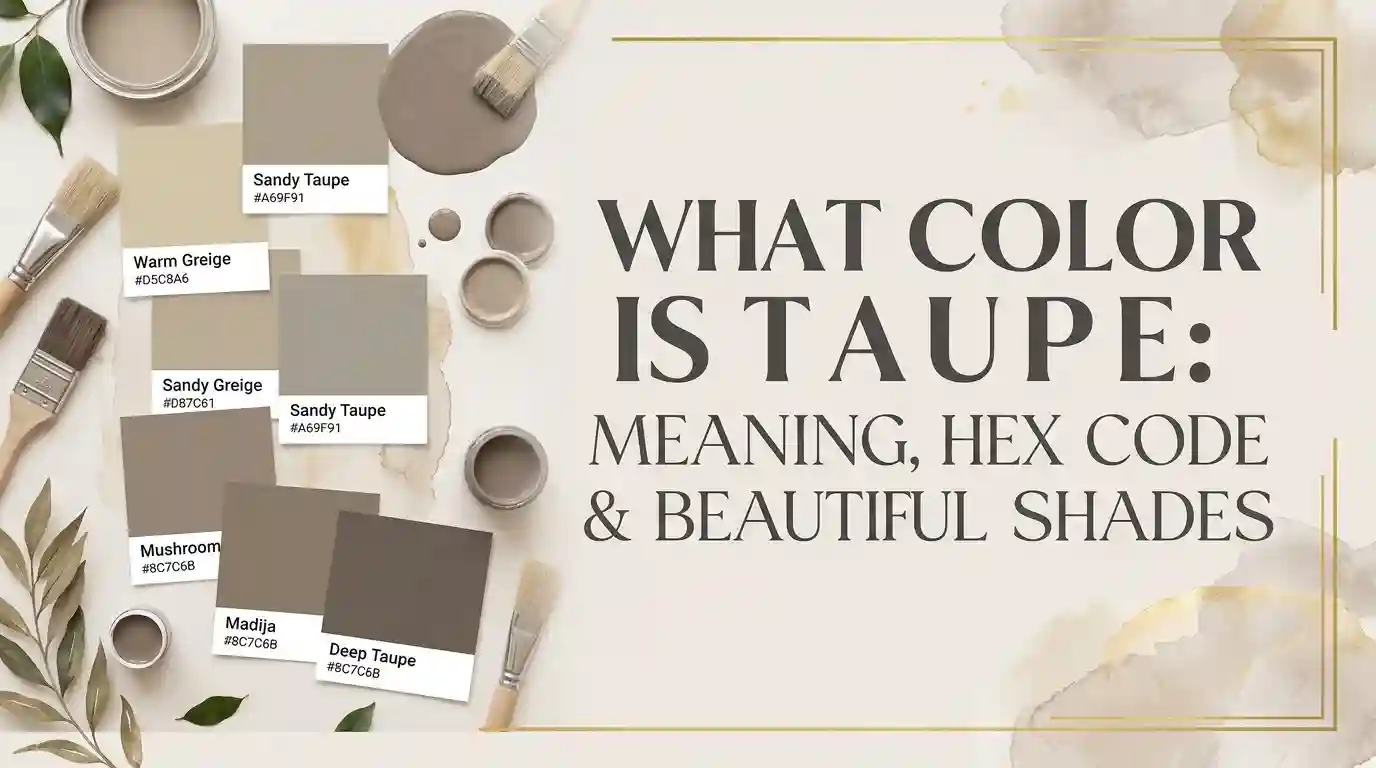
What Color is Taupe: Meaning, Hex Code & Beautiful Shades
Walk into any paint store, and you’ll spot dozens of taupe shades lined up on the wall. It’s one of the most popular neutral colors in home decor, yet most people struggle to actually describe it. So, what color is taupe, exactly?
This guide breaks down taupe’s true meaning, its exact hex code, the different shades you’ll come across, and how to use it well in both home decor and fashion. By the end, you’ll never confuse it with beige or gray again.
Taupe has quietly become one of the most requested neutrals among interior designers and homeowners alike, largely because it works in almost any space without feeling flat or boring. But its subtlety is also exactly what makes it so hard to pin down in words.
The Short Answer
Taupe is a warm neutral color that blends gray and brown, often with a subtle hint of pink or purple undertone. The standard hex code for taupe is #483C32, though the color has many variations depending on how warm, cool, or light the shade leans.
If you’re picturing a soft, earthy tone that sits somewhere between chocolate brown and dove gray, you’re already picturing what color is taupe looks like in most everyday contexts.
What Does “Taupe” Actually Mean?
Understanding the origin of the word helps explain why the color looks the way it does.
Word Origin
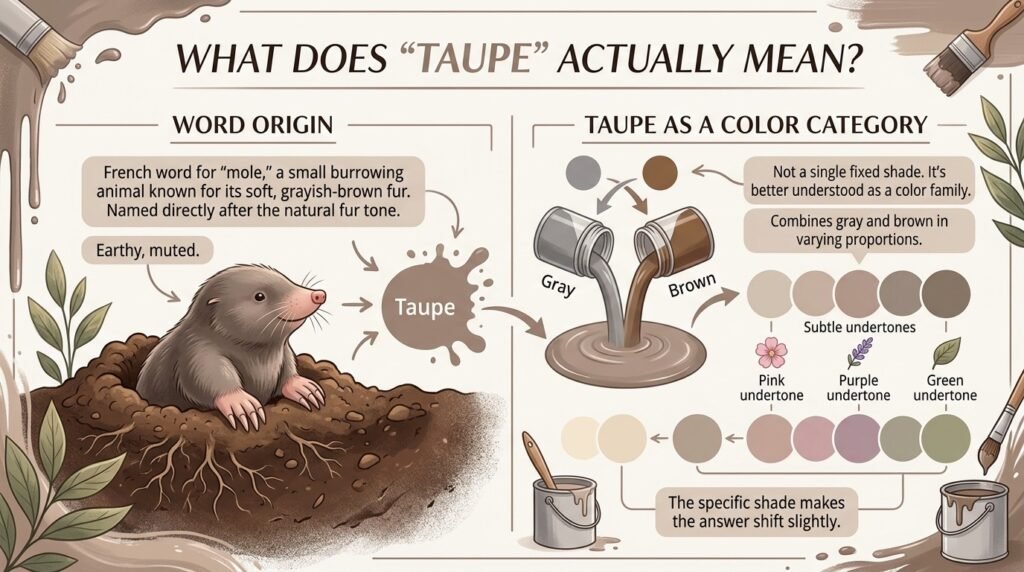
The word “taupe” comes from the French word for “mole,” the small burrowing animal known for its soft, grayish-brown fur. The color was named directly after the natural fur tone of these animals, which explains its earthy, muted quality.
Taupe as a Color Category
Taupe isn’t a single fixed shade. It’s better understood as a color family that combines gray and brown in varying proportions, often with a faint undertone of pink, purple, or even green. This is exactly why what color is taupe can feel like a tricky question — the answer shifts slightly depending on the specific shade you’re looking at.
Taupe Hex Codes and Color Values
For designers, decorators, or anyone working digitally, exact color values are essential.
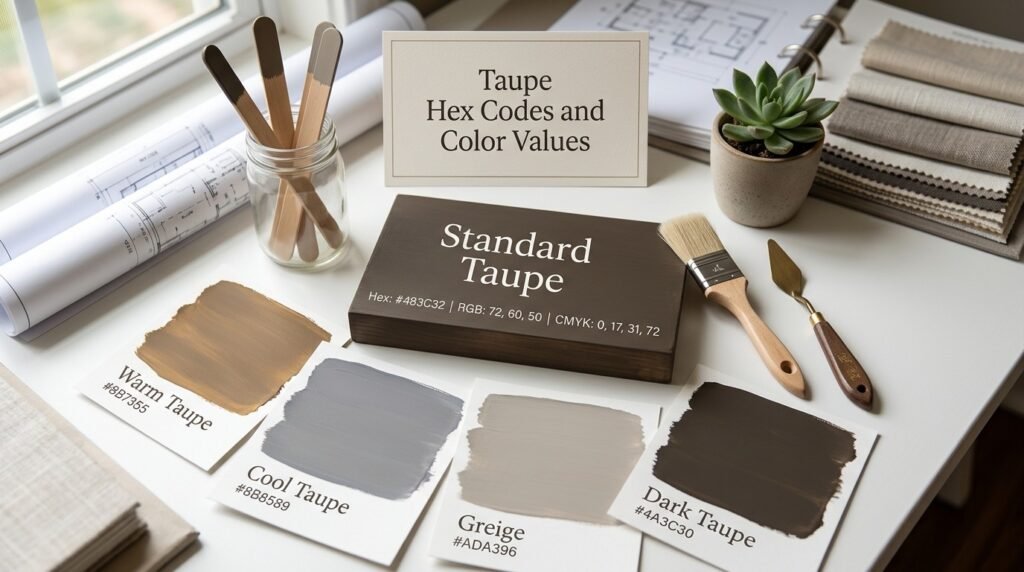
Standard Taupe
- Hex: #483C32
- RGB: 72, 60, 50
- CMYK: 0, 17, 31, 72
Popular Taupe Variations
- Warm Taupe: #8B7355 — leans more brown with a golden undertone.
- Cool Taupe: #8B8589 — leans more gray with a slightly blue undertone.
- Greige: #ADA396 — a modern hybrid of gray and beige, extremely popular in interiors.
- Dark Taupe: #4A3C30 — a deeper, richer version often used for furniture or accent walls.
Why Taupe Has Become So Popular
Over the past decade, taupe has moved from a quiet background color to one of the most requested neutrals in modern design. Part of this comes down to how adaptable it is compared to older neutral trends.
A Softer Alternative to Gray
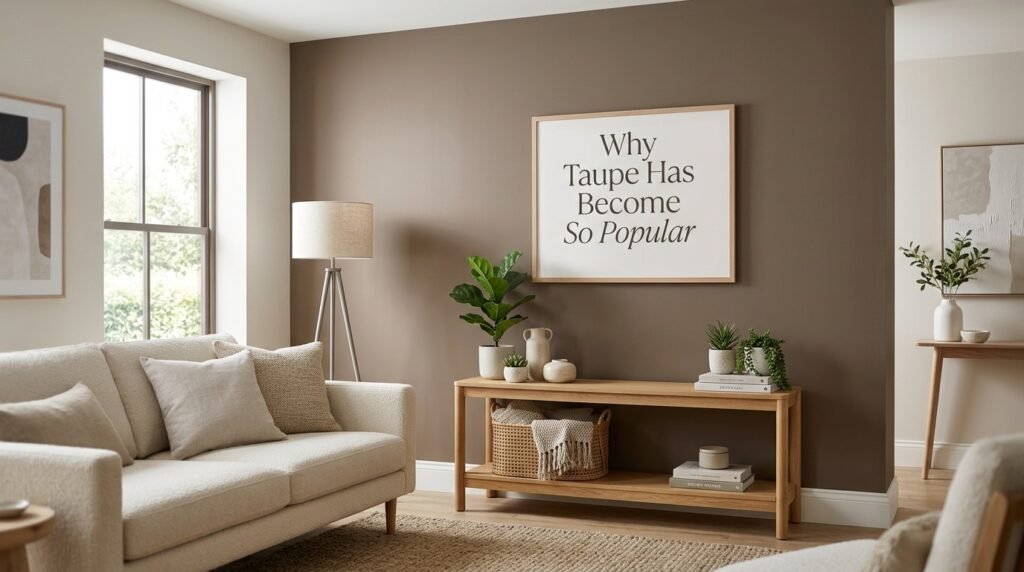
During the years when cool gray dominated home decor, many homeowners eventually found it too sterile and cold. Taupe offered a natural next step, keeping the sophistication of gray while adding warmth that feels more livable.
Works With Natural Materials
As wood tones, rattan, and other natural textures became popular again in interior design, taupe paired far better with these materials than stark gray ever could. This is one of the practical reasons behind its rise, beyond simply answering what color is taupe looks like on a swatch card.
Different Shades of Taupe
Taupe isn’t one-size-fits-all. If you’ve been wondering what color is taupe in its many forms, here’s how the main variations differ.
Warm Taupe
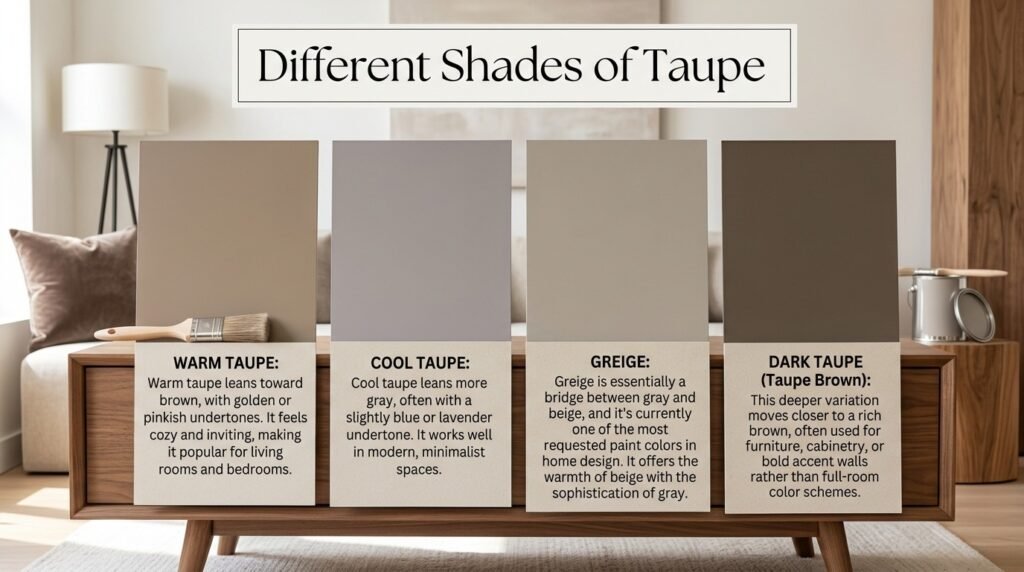
Warm taupe leans toward brown, with golden or pinkish undertones. It feels cozy and inviting, making it popular for living rooms and bedrooms.
Cool Taupe
Cool taupe leans more gray, often with a slightly blue or lavender undertone. It works well in modern, minimalist spaces.
Greige
Greige is essentially a bridge between gray and beige, and it’s currently one of the most requested paint colors in home design. It offers the warmth of beige with the sophistication of gray.
Dark Taupe (Taupe Brown)
This deeper variation moves closer to a rich brown, often used for furniture, cabinetry, or bold accent walls rather than full-room color schemes.
Taupe vs Similar Colors
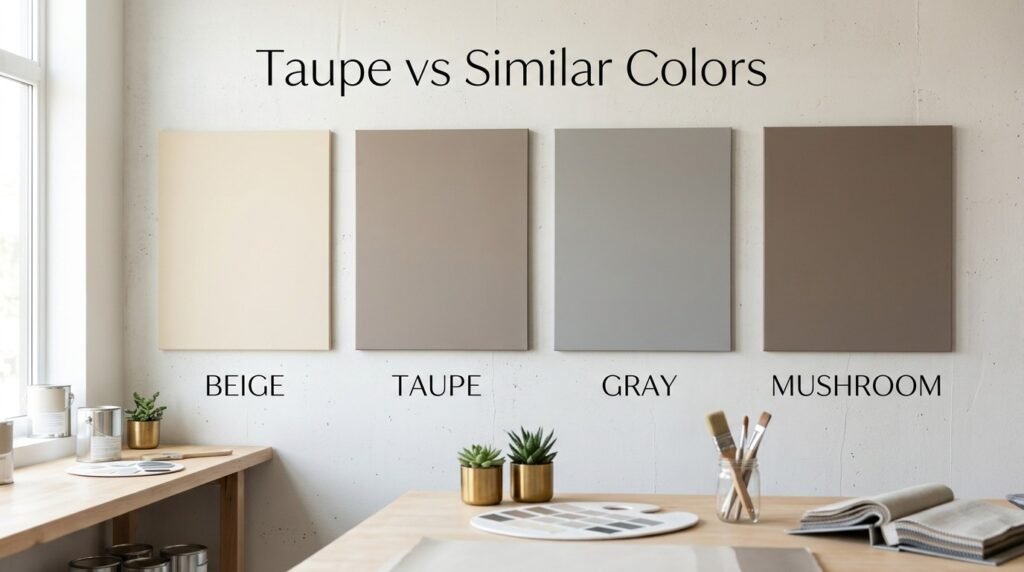
Taupe often gets confused with other neutral tones. Here’s how to tell them apart.
Taupe vs Beige
Beige is a lighter, more yellow-based neutral, while taupe has a distinct gray undertone that beige lacks. Taupe generally reads as more sophisticated and muted compared to beige.
Taupe vs Gray
Standard gray has no brown undertone at all, while taupe always carries at least a hint of warmth from its brown base. This is a key part of answering what color is taupe compared to a true, cool-toned gray.
Taupe vs Mushroom
Mushroom is very close to taupe but tends to lean slightly more brown and matte, without the subtle purple or pink undertones sometimes found in taupe.
How to Use Taupe in Home Decor
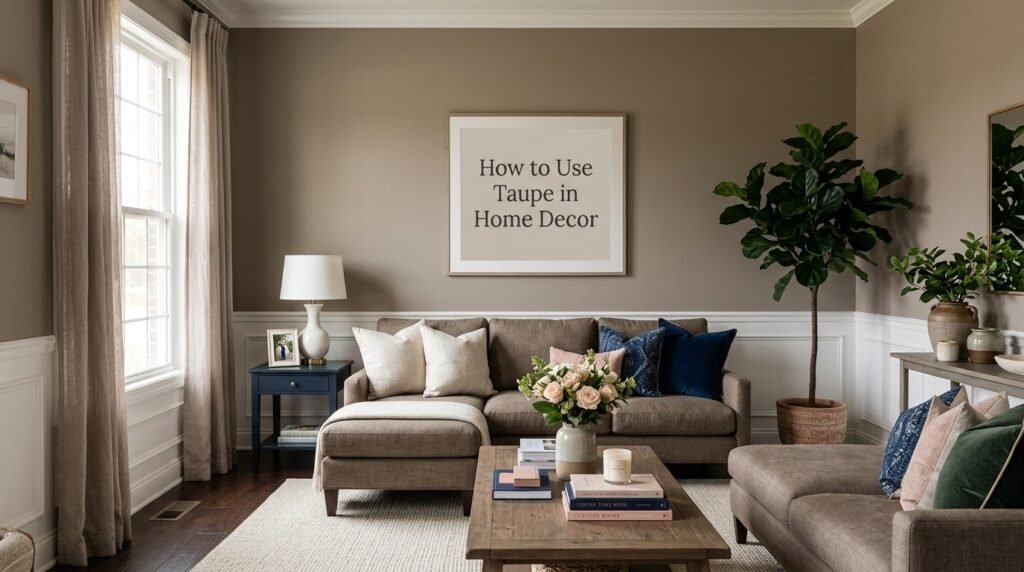
Taupe is a favorite among interior designers because of its flexibility.
Walls
Taupe walls create a warm, grounded backdrop that works with almost any furniture style, from traditional to modern minimalist.
Furniture and Textiles
Taupe sofas, curtains, and rugs add texture and depth without overwhelming a room, making them ideal for creating a calm, cohesive look.
Best Color Pairings With Taupe
- White or cream for a soft, airy contrast.
- Navy blue for a rich, sophisticated combination.
- Blush pink for a warm, romantic palette.
- Forest green for an earthy, nature-inspired look.
Taupe in Fashion and Design
Beyond home decor, taupe has earned a permanent place in fashion and branding.
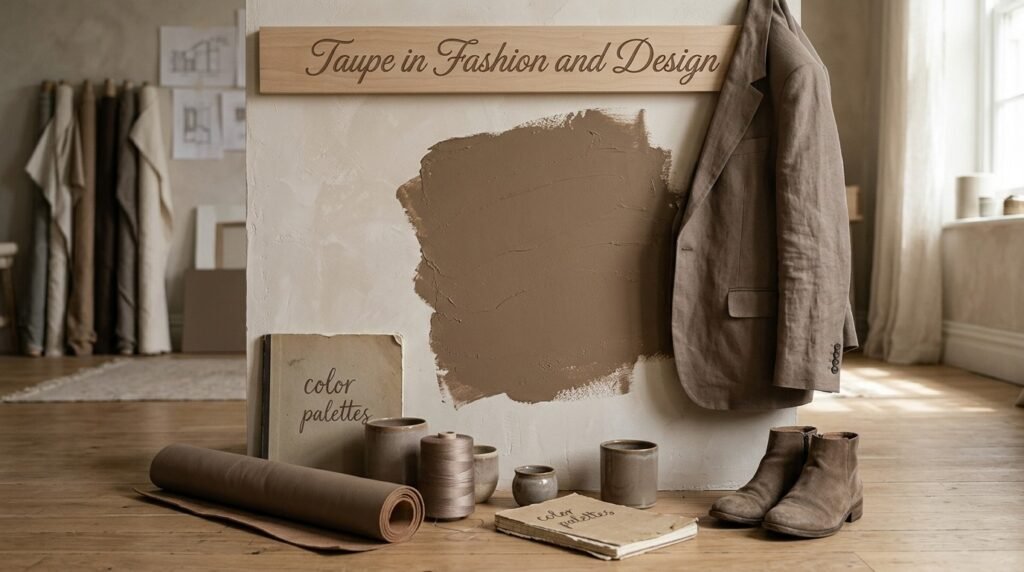
In clothing, taupe is prized as a versatile neutral that pairs easily with both warm and cool tones, making it a staple in capsule wardrobes. In makeup, taupe eyeshadows and lip shades are popular for their natural, understated look.
Interior designers often describe taupe as a “safe risk” — it’s neutral enough to avoid overwhelming a space, yet distinctive enough to add real character compared to plain white or beige. This balance is a big part of why it continues to show up across so many different design contexts, from residential homes to boutique hotels.
Frequently Asked Questions
Is taupe more gray or brown?
Taupe is a balanced blend of both, though it typically leans slightly more toward gray with a warm brown undertone.
What’s the difference between taupe and beige?
Beige is a lighter, warmer, more yellow-based neutral, while taupe carries a distinct gray undertone that gives it a more muted, sophisticated appearance.
Is taupe a warm or cool color?
Taupe can be either, depending on the specific shade. Warm taupe leans brown and golden, while cool taupe leans gray with a slightly blue undertone.
What is the hex code for taupe?
The standard hex code for taupe is #483C32, though popular variations like greige and warm taupe have their own distinct hex values.
Does taupe go with everything?
Taupe is considered one of the most versatile neutral colors, pairing well with whites, blues, greens, and pinks, which is why it’s so popular in both home decor and fashion.
Is taupe the same in every paint brand?
No. Since what color is taupe can vary slightly by undertone, different paint brands often label noticeably different shades as “taupe,” so it’s always best to check the exact hex code or swatch in person before purchasing.
Final Thoughts
So, what color is taupe? At its core, it’s a warm, muted blend of gray and brown, named after the soft fur of a mole. With its wide range of shades, from warm and cozy to cool and modern, taupe remains one of the most flexible and timeless neutrals in both home design and fashion.
Whether you’re choosing a paint color for your living room or picking out a wardrobe staple, taupe offers a quiet, sophisticated versatility that’s hard to match.